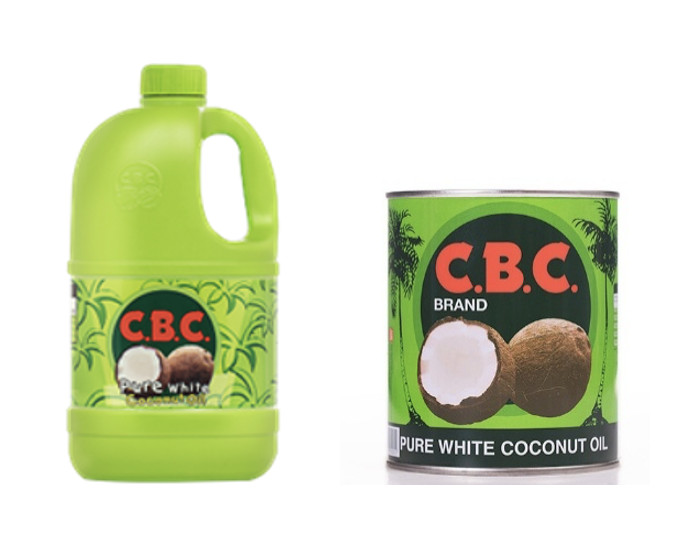
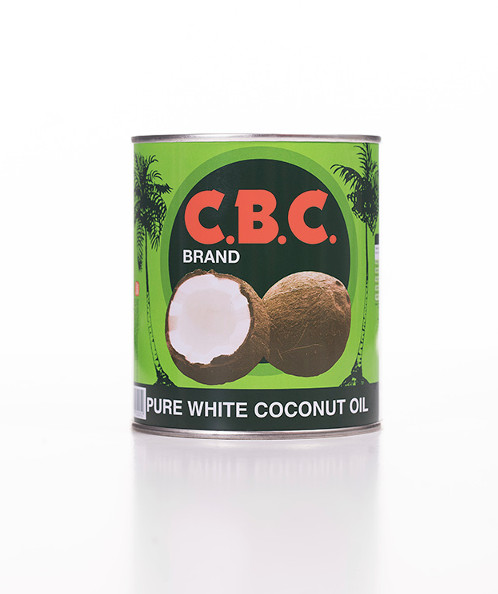
C.B.C. Brand Pure White Coconut Oil, Trusted Since 1973

More than 50 years of trusted heritage in pure white coconut oil, with distinctive brand cues that help shoppers choose the original with confidence.


TRUSTED SINCE 1973

Look for the exact “C.B.C. Brand” Name

Distinctive RED lettering with full stops,

Familiar bright green pack

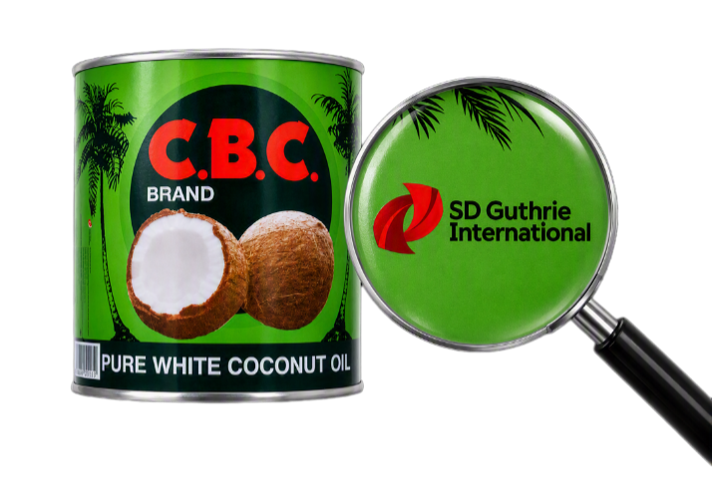
Product information linked to SD Guthrie International.


A Heritage That Began in 1973

Some products enter a category. Others help shape it. Established in 1973, C.B.C. Brand Pure White Coconut Oil has served consumers across generations and markets for more than five decades. Its long-standing presence has made C.B.C. a recognised pioneer in the pure white coconut oil category and a name associated with familiarity, quality and trust.

That heritage is more than a date on a pack. It represents years of consistent product experience and a brand identity that families, retailers and business partners have come to recognise. In a busy marketplace where many products may appear similar at first glance, the original C.B.C. continues to stand apart through its name, history and distinctive pack identity.

Why the Original Matters

Packaging similarities can make shopping confusing. Colours, letter styles and pack formats may be used in ways that look familiar from a distance. For shoppers, the easiest way to choose confidently is to check the brand carefully rather than relying on colour alone.

When you choose C.B.C., look for the full C.B.C. Brand name and the official pack details. These are the clearest signs that you are selecting the heritage brand that has been serving pure coconut oil since 1973.


How to Spot the Original C.B.C. Coconut Oil?

Check the C.B.C. name and logo
Look for the original C.B.C. name and the bold red C.B.C. logo on the pack. The spelling and full stops matter, so be careful of similar-looking brands.

Check the familiar green pack identity
C.B.C.
is recognised by its green packaging and coconut imagery. Use these as supporting cues, but always confirm the C.B.C. name because colour alone is not proof of authenticity.


Confirm the product description
The pack should clearly identify as Pure White Coconut Oil.

Check the Label
Verify that the product is manufactured by SD Guthrie International. Product of Malaysia. This is one of the key ways to identify the original C.B.C. Brand Pure White Coconut Oil.

Product Sizes Available in the Market
C.B.C. Coconut Oil is available in the following pack sizes:

HDPE Bottles Tin Packs
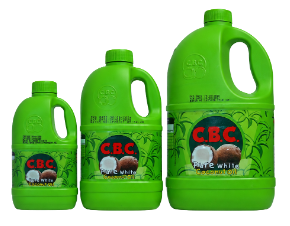
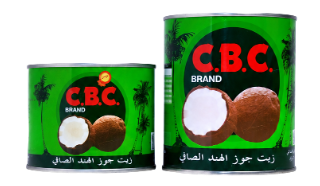
500ml, 1L and 2L 400g and 680g

Consumers should ensure that the product purchased matches one of these official C.B.C. pack sizes.

MUST HAVE: C.B.C.

Check all three letters and all three full stops before you buy.

The Same Trusted Name, Ready for Today

For more than 50 years, C.B.C. Brand Pure White Coconut Oil has connected heritage with everyday versatility. It remains suitable for traditional cooking, modern recipes and selected personal care routines, making it a practical choice for households with different needs and lifestyles.

As C.B.C. moves forward, its promise remains clear: preserve the trusted heritage built since 1973 while helping a new generation recognise and choose the original.


For sales and product inquiries, email product.enquiries@sdguthrie.com.

NATRIÉO Tri.E Tocotrienols: Know the Brand, Know the Original

NATRIÉO is a tocotrienol supplement developed from palm fruit extract, bringing together the benefits of naturally derived tocotrienols in a convenient daily supplement. It is part of SD Guthrie International Nutrition’s health and nutrition portfolio.

The story behind NATRIÉO goes back more than 25 years, with research into tocotrienols spearheaded by Tan Sri Emeritus Professor Datuk Dr. Augustine Ong, a prominent figure in Malaysia’s palm oil research and industry. This research helped contribute to the development and understanding of tocotrienols derived from Malaysian palm oil.

How to Spot the Original NATRIÉO Tri.E Tocotrienols

When it comes to your health, knowing what you are taking matters. With health supplements becoming increasingly available through both physical and online stores, it is important to make sure that the NATRIÉO Tri.E you purchase is the genuine product.

NATRIÉO Tri.E Tocotrienols is part of the NATRIÉO range of palm-based tocotrienol supplements. Before opening your next bottle, take a moment to look for these key features that can help you identify the original NATRIÉO Tri.E.

  1. Look for the Seal Sticker on Top of the Packaging

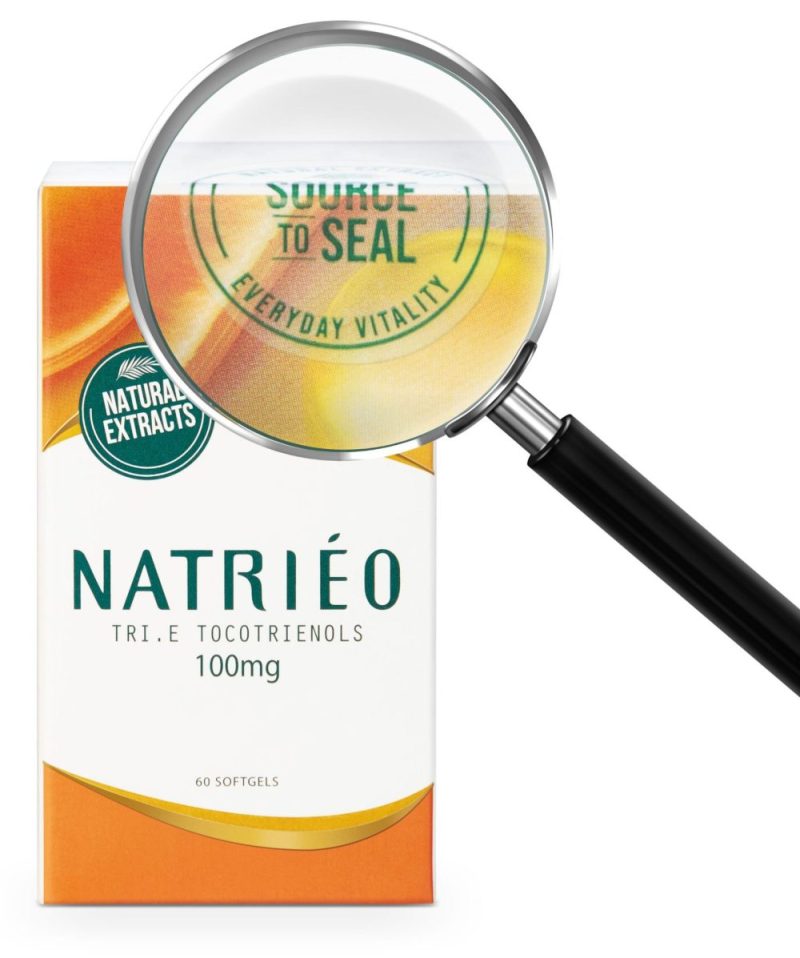
Magnified Source to Seal sticker on top of genuine NATRIÉO Tri.E packaging

Start from the top.

An original NATRIÉO Tri.E package comes with a seal sticker positioned on top of the packaging. Check that the seal is present and intact before opening the product.

A seal that appears missing, damaged or tampered with should be treated with caution.

What to look for:
✓ Seal sticker on top of the box
✓ Seal is intact
✓ No obvious signs of tampering

  1. Check the Official FarmaTag Hologram

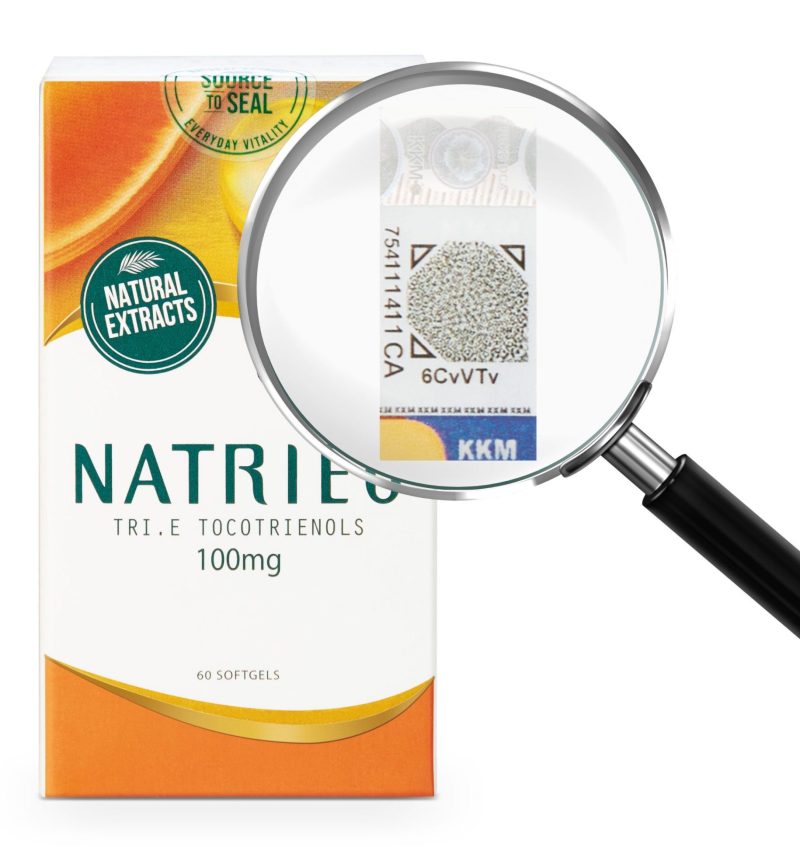
Official KKM FarmaTag hologram on NATRIÉO Tri.E Tocotrienols box

Next, look for the official pharmaceutical safety hologram on the packaging.

In Malaysia, registered pharmaceutical products are required to carry the appropriate registration information and hologram security label. The Ministry of Health Malaysia introduced FarmaTag as its pharmaceutical safety hologram system, replacing the earlier Meditag system.

Consumers should therefore check that the appropriate official FarmaTag hologram is present on their NATRIÉO Tri.E packaging.

For additional assurance, consumers can verify the relevant hologram using the verification method specified by KKM.

What to look for:
✓ Official FarmaTag hologram
✓ Hologram is properly attached
✓ No obvious signs that the hologram has been removed or replaced

  1. Look for the Gold-Stamped Label on the Bottle

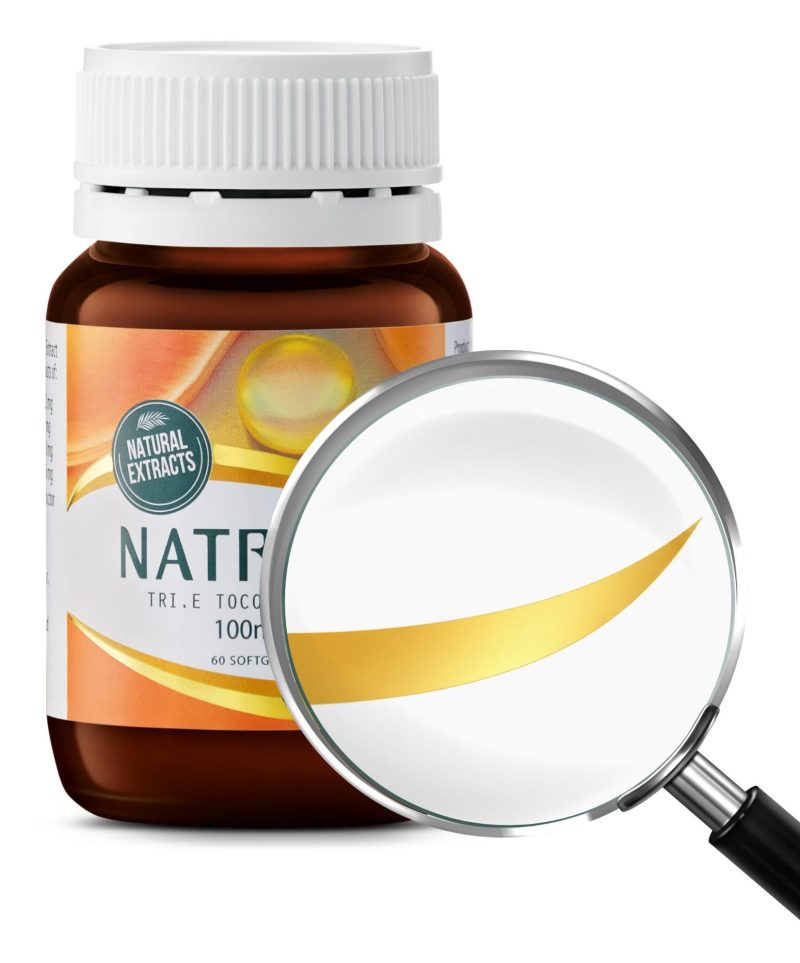
Gold-stamped label on genuine NATRIÉO Tri.E Tocotrienols bottle

Once you open the outer packaging, take a closer look at the bottle itself.

The original NATRIÉO Tri.E bottle features a distinctive gold-stamped label. The metallic gold finishing is one of the visual details to check when inspecting the product.

Look closely at the quality and appearance of the label. It should have the familiar NATRIÉO presentation and gold-stamped finishing rather than an imitation that looks noticeably different. 

What to look for:
✓ Gold-stamped detailing on the bottle label
✓ Clear and consistent printing
✓ Familiar NATRIÉO branding and presentation

  1. Check the Soft gels — They Should Be Golden in Colour

Golden-coloured NATRIÉO Tri.E Tocotrienols soft gel

Finally, check what’s inside.

The NATRIÉO Tri.E soft gels have a characteristic golden colour. If the appearance of the soft gels is noticeably different from what you normally receive, avoid consuming them until you have verified the product.

What to look for:
✓ Golden-coloured soft gels
✓ Consistent appearance between soft gels
✓ No unusual changes in their physical appearance

Four Checks. One Original.

Spotting the original NATRIÉO Tri.E can be as simple as remembering these four features:

Seal it. Hologram it. Check the gold. See the golden soft gel.

From the seal sticker on top of the packaging and the official FarmaTag hologram, to the gold-stamped bottle label and golden-coloured soft gels, each feature gives you another point to check before consuming the product.

When in doubt, don’t rely on appearance alone. Check the product’s registration information through the official National Pharmaceutical Regulatory Agency (NPRA) registered-product search and verify the pharmaceutical safety hologram through the method provided by KKM.

Know the signs. Choose the original NATRIÉO Tri.E with confidence.

For sales and product inquiries, email product.enquiries@sdguthrie.com.

SUNBEAM Sunflower Oil: 50 Years of Trust, Nutrition, and Healthier Cooking

A Heritage of Quality Since 1974 

For over 50 years, SUNBEAM has been a relied-upon staple in family kitchens. Established in Singapore in 1974, SUNBEAM Sunflower Oil delivers a trusted combination of light flavour, superior cooking performance, and everyday versatility.

Nourishing Modern Lifestyles

Today’s consumers prioritise wellness without wanting to sacrifice flavour. SUNBEAM Sunflower Oil offers a light taste profile and essential nutrients that support a healthier lifestyle—proving that balanced meals can be rich in flavour.

Backed by SD Guthrie International

As part of the SD Guthrie International portfolio, SUNBEAM benefits from quality manufacturing standards and a sustainable supply chain. Today, the brand touches homes across Singapore, Malaysia, Nepal, Cambodia, Mauritius, and Brunei.

Why Choose SUNBEAM Sunflower Cooking Oil?

✅ Rich in Vitamin E
✅ Contains Omega 6 fatty acids
✅ Cholesterol-free
✅ Light and neutral taste
✅ Suitable for frying, roasting, baking and stir-frying
✅ Versatile for a wide range of cuisines
✅ Halal Certified
✅ Healthier Choice Certified

Nutritionists recommend including sources of essential fats and antioxidants as part of a balanced diet. Sunflower oil is naturally rich in Vitamin E¹, an important antioxidant that helps protect the body’s cells from oxidative stress, and contains Omega-6 fatty acids², an essential nutrient needed to support normal growth, skin health, and overall body function.

As all vegetable oils are cholesterol-free, sunflower oil is a suitable choice for consumers looking to make healthier dietary decisions for themselves and their families³. Combined with its light taste and versatility in cooking, it offers a simple way to prepare everyday meals while supporting a balanced and nutritious lifestyle⁴˒⁵.

Light Taste That Enhances Food

The mild and neutral flavour of sunflower oil allows the natural taste of ingredients to shine through. Whether you’re preparing Asian dishes, Western cuisine, or everyday family favourites,

SUNBEAM Sunflower Oil complements rather than overpowers your food.

Excellent Cooking Performance

SUNBEAM Sunflower Oil performs well across a wide range of cooking methods, making it a versatile kitchen essential for everyday use.

Certified Trust & Quality Standards

  • Halal Certified: Meeting strict international halal compliance standards.
  • Healthier Choice Certified: Awarded the Healthier Choice Symbol by the Singapore Health Promotion Board.

Available in different packsize of 1L, 2L and 5L.


From Wok to Plate
: A Seamless Culinary Chameleon

With a smoke point reaching 230°C (440°F), sunflower oil excels across intense cooking methods without burning or imparting off flavours:

  • Stir-Frying: Withstands high wok heat to lock in moisture, preserving the vibrant colour and natural crunch of fresh vegetables.
  • Deep-Frying: Seals foods quickly to create a light, golden crust, delivering maximum crunch with zero greasy residue.
  • Grilling: Locks in marinades and prevents sticking on high-temperature grates, promoting an even, flavourful sear on meats and vegetables.


Char Kway Teow

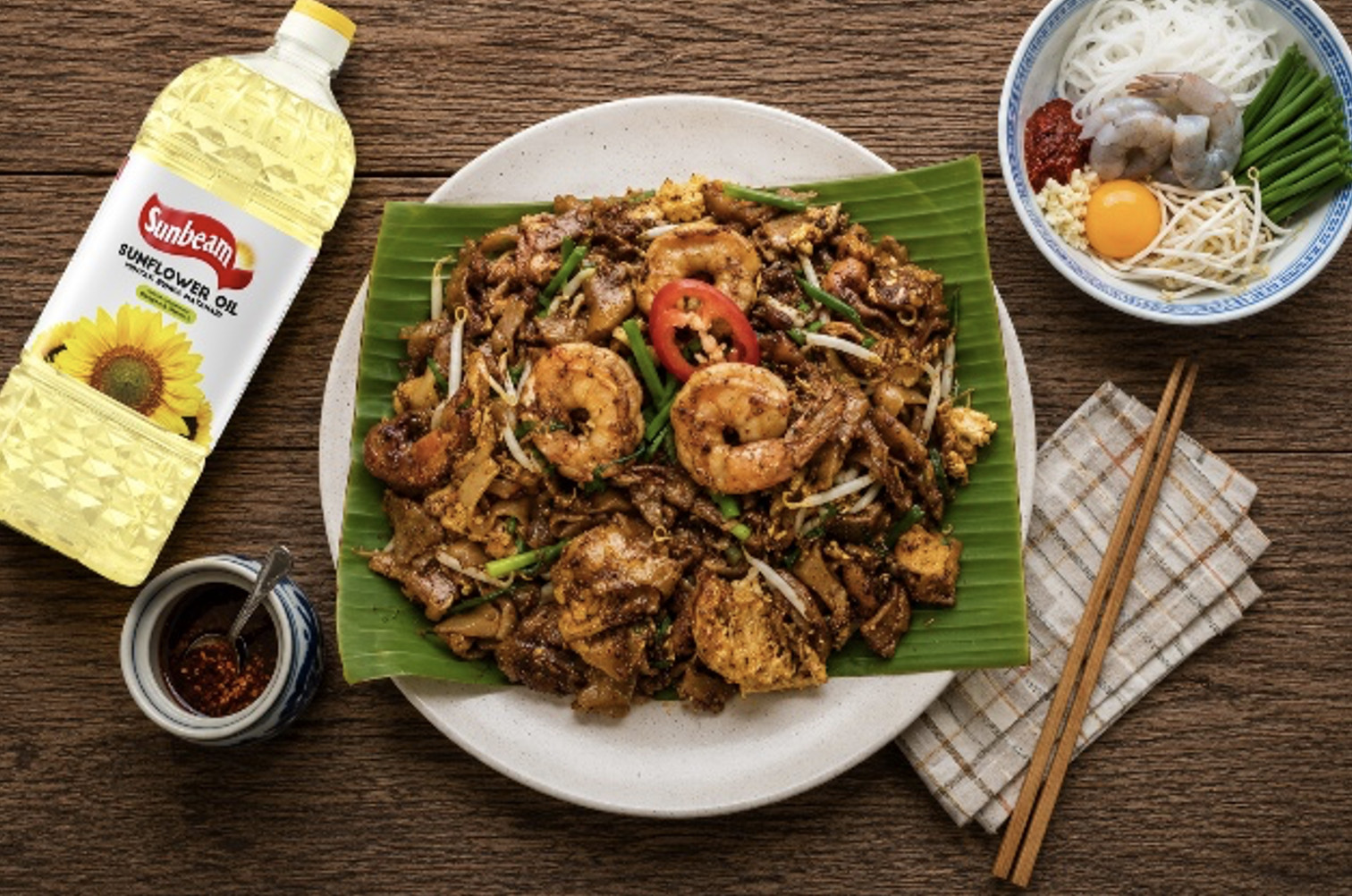
The signature taste of Char Kway Teow relies on a delicate balance of savory soy sauce, garlic, seafood, and smoky, wok-charred noodle flavours that heavy oils easily overpower. SUNBEAM Sunflower Oil provides a clean, neutral, and light alternative. By acting purely as a heat conductor, it allows the dish’s rich, smoky flavors to shine through without leaving a heavy, greasy finish.

Key Ingredients

  1. 150g fresh flat rice noodles (kway teow)
  2. 2 tablespoon SUNBEAM Sunflower Oil
  3. 3-4 medium prawns, peeled and deveined
  4. 1 tablespoon minced garlic
  5. 1 tablespoon chili paste (cili bo)
  6. 1 egg
  7. 1/2 cup bean sprouts
  8. Handful Chinese chives (ku Chiat), cut into 2-inch lengths
  9. Sauce mixture: 1 tablespoon light soy sauce, 1 teaspoon dark soy sauce, 1/2 teaspoon fish sauce, pinch of sugar and white pepper

Method

  1. Heat a wok over high heat. Add 1 tablespoon SUNBEAM Sunflower Oil and cook the prawns for about 30 seconds, or until they turn pink. Set aside.
  2. Add the remaining 1 tablespoon SUNBEAM Sunflower Oil, garlic, and chili paste. Stir-fry for about 10 seconds until fragrant.
  3. Add the flat rice noodles and sauce mixture. Toss well for about 30 seconds.
  4. Push the noodles to one side of the wok. Crack in the egg and gently scramble it. Once partly cooked, mix it into the noodles.
  5. Add the bean sprouts, Chinese chives, and cooked prawns. Toss everything together for another 30 seconds until well combined and heated through.
  6. Serve immediately and enjoy.


Cucur Udang

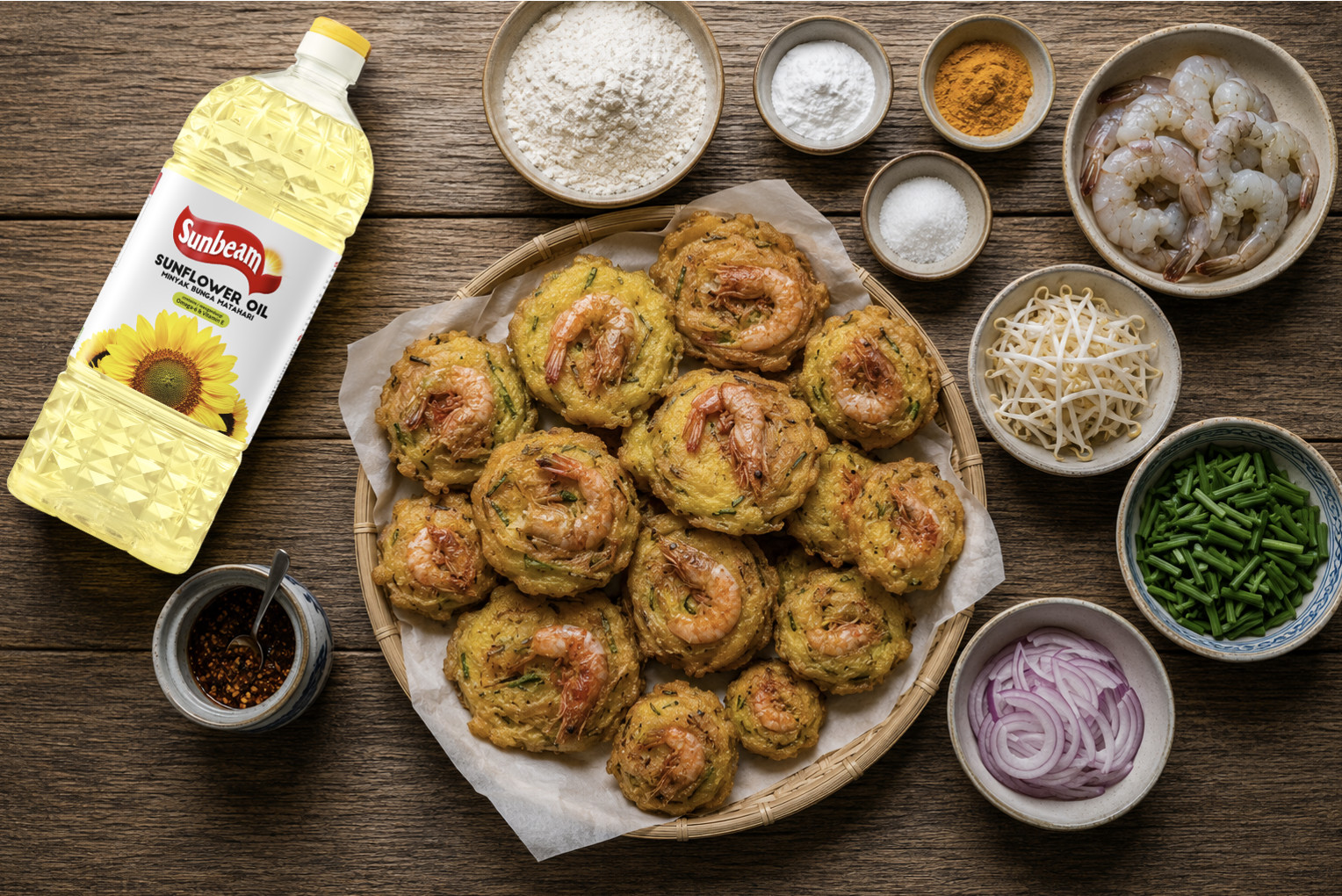
Perfect Cucur Udang requires a golden, shatteringly crisp exterior with a light, fluffy center. Because traditional fritter batters easily absorb heavy cooking fats, SUNBEAM Sunflower Oil’s light viscosity and high heat stability provide the ideal frying medium. It seals the batter instantly for a clean, non-greasy crunch allowing the natural sweetness of fresh prawns and aromatic chives and onion  to take center stage.

Key Ingredients

  1. 200g plain flour
  2. 1/2 teaspoon baking powder
  3. 1/2 teaspoon turmeric powder
  4. 1 teaspoon salt
  5. 250ml cold water
  6. 100g small prawns (shells on or off, dried with paper towels)
  7. 50g bean sprouts
  8. 25g Chinese chives, chopped
  9. 50g red onion, thinly sliced
  10. 500ml SUNBEAM Sunflower Oil (for deep-frying)

Method

  1. In a large bowl, mix the flour, baking powder, turmeric, salt, and cold water until smooth. Add the bean sprouts, chives, and red onion, then stir to combine.
  2. Heat 500ml SUNBEAM Sunflower Oil in a deep pot or wok for frying.
  3. Dip a metal ladle into the hot oil for about 30 seconds. Fill the ladle with some batter and place 1 to 2 prawns on top.
  4. Carefully lower the ladle into the hot oil. After a few seconds, gently release the fritter from the ladle into the oil.
  5. Fry for 3 to 4 minutes, turning occasionally, until golden brown and crispy.
  6. Remove and drain on paper towels. Serve hot with chili dip.

For sales and product inquiries, email product.enquiries@sdguthrie.com.


References
¹ National Institutes of Health (NIH), Office of Dietary Supplements. Vitamin E Fact Sheet for Health Professionals. Vitamin E acts as an antioxidant and helps protect cells from oxidative damage.

² FAO/WHO Expert Consultation. (2010). Fats and Fatty Acids in Human Nutrition. Omega-6 fatty acids are essential fatty acids that must be obtained from the diet.

³ American Heart Association. Healthy Cooking Oils. Vegetable oils, including sunflower oil, contain no cholesterol and are recommended as healthier alternatives to solid fats.

⁴ World Health Organization. (2023). Saturated Fatty Acid and Trans-Fatty Acid Intake for Adults and Children: WHO Guideline. Recommends replacing saturated fats with unsaturated fats as part of a healthy diet.

⁵ Sacks, F.M., et al. (2017). Dietary Fats and Cardiovascular Disease: A Presidential Advisory from the American Heart Association. Replacing saturated fats with polyunsaturated fats supports cardiovascular health.

Beyond the Single Oil: Engineering Purpose-Built Fats Through Enzymatic Interesterification (EIE)

Creating the right fat for the right application begins long before the finished product reaches the shelf.

It starts with understanding how different oils and fats behave, how they complement each other, and how their functionality can be refined to meet specific performance requirements.

This is where enzymatic interesterification (EIE) plays an important role.

Rather than modifying a single oil in isolation, EIE works with a deliberately formulated blend of palm-based fractions, combining their strengths before fine-tuning performance.

By bringing together palm oil, palm stearin, and palm kernel, manufacturers can create fat systems designed around the requirements of applications such as margarines, bakery fats, confectionery, and speciality fats.

Building functionality through the right blend

Each palm-based fraction contributes a different strength, forming the foundation of a fat system designed around a specific performance requirement.

Article content
 

However, combining these components in the right proportions may not always deliver the exact melting behaviour, texture, or crystallisation profile required for a specific application.

This is where EIE provides another level of control.

Fine-tuning performance through enzymatic restructuring

At its core, EIE rearranges existing fatty acids within triglyceride molecules across the blend. It does not change what the fat is made of, but how its components are organised to achieve the desired performance.

In simple terms, EIE refines the arrangement of existing components to create a fat system with more targeted functionality.

Article content

This allows manufacturers to fine-tune melting behaviour, crystallisation, texture, and consistency, transforming blends into more controlled fat systems.

Creating fats designed for specific applications

The value of EIE lies in its ability to tailor palm-based blends around the functional requirements of different applications.

Tailoring fat solutions through EIE to deliver the right functionality for every food application.

Tailoring fat solutions through EIE to deliver the right functionality for every food application.
 

EIE can also modify melting profiles to replicate desirable characteristics associated with naturally occurring fats such as butter, supporting the development of more specialised fat solutions.


Why enzymatic interesterification (EIE)?

EIE is one approach within the broader field of fat modification.

Chemical interesterification can also restructure palm-based blends, but it does so through a more random redistribution of fatty acids. EIE uses lipase enzymes for a more selective rearrangement, providing closer control over structure and functionality under milder processing conditions. This selective enzymatic approach can offer a cleaner processing route with reduced waste generation, supporting efforts to improve environmental performance without compromising functionality.

Article content
The difference between Chemical Interesterification and Enzymatic Interesterification.


This greater selectivity allows manufacturers to develop fat systems with more targeted performance characteristics. EIE also provides a route to achieve required functionality without relying on partial hydrogenation, which has historically been associated with industrial trans fats.

It is important to note that EIE changes a fat’s physical properties rather than its nutritional profile.

Bringing EIE capability closer to customers

As demand grows for more specialised fat systems, having the capability to produce these solutions closer to customers becomes increasingly important.

As part of its wider site investment, SDGI Liverpool is establishing new EIE production capability to support the growing demand for specialised fat systems.

Article content


The new capability will utilise proven enzyme technology from Novozymes to support selective fatty acid rearrangement within the fat structure.

A wider investment in Liverpool’s future capabilities

The new EIE capability forms part of a wider investment at SDGI Liverpool, strengthening the site’s production capacity, infrastructure, and operational capabilities to support future growth.

Article content


The investment includes a new refinery designed to enhance refining capacity and support future production needs, incorporating technologies designed to meet current and upcoming regulatory requirements while utilising best available technologies to improve energy efficiency.

A new effluent treatment plant also enhances wastewater treatment capability by capturing and treating process wastewater streams before discharge, reinforcing SDGI’s continued commitment to responsible operations and environmental stewardship.

Together, these investments reflect SDGI Liverpool’s focus on developing advanced processing capabilities, strengthening infrastructure, and supporting evolving customer needs.

The future of precision fat design

The future of speciality fats lies in precision: understanding the unique contribution of each component and tailoring blends around the performance each application requires.

By combining deliberate blend design with enzymatic restructuring, EIE enables the development of purpose-built fat systems with greater control over functionality, texture, and performance.

As SDGI Liverpool expands its capabilities, this investment strengthens its ability to develop and deliver more specialised palm-based fat solutions for evolving customer needs.

Is “Compliance” Enough? How SD Guthrie Berhad is Outlining the Future of Regenerative Palm Oil

For nearly two decades, the palm oil industry has been defined by the idea of compliance.

As an industry, we have spent billions of dollars and countless man-hours defining sustainability. The No Deforestation, No Peat, and No Exploitation (NDPE) framework has served as a solid foundation, establishing the standards of integrity that have integrated the industry into the modern global supply chain.

But as we look toward the demands of the next century, a critical question emerges for every investor, buyer, and stakeholder in the agri-business sector. How do we look beyond compliance to unlock the full potential of our landscapes?

If we only focus on doing no harm, how do we address the biological degradation already present in our global landscapes? At SD Guthrie Berhad, the conclusion we have arrived at poses both a challenge and an opportunity.

From restoring soil health to building landscape resilience, this shift from meeting standards to active regeneration forms the core of our “Beyond Zero” framework.

“Beyond Zero”: The Strategic Pillar of Restoration

To understand the vision ahead, one must understand SD Guthrie’s “Beyond Zero” Framework. Not to be confused with typical marketing slogans, the framework serves as a comprehensive operational philosophy that recognises that “Net Zero” is merely a milestone on a much longer journey.

While “Beyond Zero” addresses everything from emissions to supply chains, the Restore pillar is where the move toward regeneration truly happens. Since our value is built on nature, we are in a unique position to go beyond simply ‘doing no harm.’ By focusing on restoration, we are actively bringing back nature and biodiversity within our operations.

At SD Guthrie, regenerative agriculture is about producing palm oil that preserves ecosystems, strengthens resilience, and uplifts livelihoods – safeguarding our soils and landscapes for future generations. Our approach is outcomes-driven, focusing on healthier soils, better yields, and stronger socio-economic wellbeing across our operations and the wider landscapes where we work. We achieve this by taking established agricultural practices and refining them, using smarter inputs, cutting emissions, and strengthening fair labour standards. By pushing our ambition further through innovation and rigorous monitoring, we ensure every action drives accountability and delivers measurable impact.

The Science of Soil: Restoring the Foundation

Regeneration is fundamentally about working with natural processes to restore the vitality of the land. One of the many indicators adopted to measure Regenerative Palm Oil is the measure of Soil Organic Carbon (SOC). Traditional agriculture often treats soil as a simple medium to hold the plant while external inputs provide nutrition. At SD Guthrie, we are shifting this perspective. We view the soil as a living, breathing asset that is central to the health of our plantations.

Solving The Problem of Degraded Soil

Degraded soil lacks the microbial diversity and organic matter found in healthy landscapes. This results in heavy compaction, creating a tough, rubbery layer that prevents water and air from reaching the roots. This increases crop vulnerability, especially during the increasingly frequent droughts and floods caused by climate change.

At SD Guthrie, regeneration means taking our current Best Management Practices and innovating them further. We achieve this through a disciplined approach to land and crop health.

Through precision agriculture for smarter fertiliser use and massive biomass return, which includes Empty Fruit Bunches application and frond stacking, we can potentially restore and strengthen soil vitality. This approach brings together rigorous soil and water conservation, cover crops, minimal disturbance, and Integrated Pest Management using barn owls and beneficial plants. Supported by our high-yielding GenomeSelect® seeds, these integrated practices maximise the potential of our land, driving operational efficiency while advancing environmental responsibility. By maintaining the tenderness and porosity of the soil, we secure the long-term resilience of our yields, a technical edge that supports SD Guthrie’s commitment to regeneration.

Piloting at Scale

A global strategy only creates value once it’s put into practice. In 2025, SD Guthrie initiated a structured, five-year pilot (2025–2030) to test and refine our Regenerative Agriculture Framework in real-operating conditions.

We have selected two distinct landscapes to serve as our living laboratories, each representing unique environmental and operational challenges:

The Carey Island Landscape (Central East Region)

Covering over 5,041 hectares of planted area, this pilot is focused on refining the framework in high-productivity environments. Here, we are establishing baselines for key environmental indicators, developing the monitoring and evaluation mechanisms that will eventually be scaled across our global operations.

The Tawau-Kunak Landscape (Sabah)

In partnership with World Wide Fund for Nature, Malaysia (WWF-Malaysia), this pilot covers approximately 13,000 hectares across five RSPO-certified SD Guthrie estates, including the Binuang Strategic Operating Unit. This landscape is critical because it represents the Implementation Paradox – the challenge of balancing high-yield production with the need for wildlife connectivity and biodiversity restoration.

Driving Change at Scale: The WWF-Malaysia Partnership

Managing a footprint of this size requires a careful balance between production and nature restoration. Our five-year partnership with WWF-Malaysia is a strategic effort to address this challenge. WWF works with organisations that have the opportunity to make a meaningful contribution to addressing threats to nature. As a business with a significant impact on natural resources, we recognise our responsibility to be part of the solution. By combining our operational scale with their expertise, we are delivering measurable outcomes, such as wildlife corridors, that would not be possible independently. This partnership represents two leading organisations piloting approaches aimed at transforming the entire industry.

Wildlife Connectivity and “Reconnect Borneo”

As part of the Reconnect Borneo initiative, the intention is to actively restore ecological connectivity across Borneo by establishing a network of wildlife corridors that allow species to move safely between fragmented forest patches. This will consequently restore natural ecosystem services such as pollination, pest control, and water filtration that a healthy plantation relies on.

Yield and Resilience: The Business Case for Investors

From an investment standpoint, the business case for regenerative agriculture is built on enhancing risk mitigation. While high-yield plantations are essential for global food security and shareholder value, long-term productivity is at risk if soil health is allowed to deplete. In an era of climate change, a depleted plantation can represent a significant long-term risk.

The Resilience Hypothesis

We believe that regenerative practices will create yield resilience. By investing in soil health today, we aim to reduce our reliance on expensive chemical inputs and increase our ability to withstand erratic weather patterns. Our goal is to demonstrate that a healthy ecosystem is the most effective safeguard against the rising costs and physical risks of a changing climate.

Market Differentiation

For downstream buyers, SD Guthrie delivers a clear, proven value proposition. Through our offering of RSPO Segregated (SG) palm oil, we have consistently helped customers address critical greenhouse gas (GHG) emissions and secure verified sustainable solutions for their supply chains. Building on this foundation, we are now exploring the concept of Regenerative Palm Oil as an additional value-add, positioning our partners to support the reduction of Scope 3 emissions and future-proof their portfolios against stricter global regulations.

Data Integrity and Transparency

Guided by our “Beyond Zero” framework, we provide investors with measurable indicators, such as reductions in Scope 1, 2, and 3 emissions. This is complemented by robust traceability data from our sustainable supply chains to validate deforestation-free practices, reinforcing our commitment to data-backed performance. By providing this level of detail, we minimise ambiguity in data interpretation for our clients, supporting their own technical assessments and protecting them from the reputational risks of greenwashing.

Building a Regenerative Path

The key to our progress lies in combining better agricultural practices with a deep commitment to the people and communities who sustain our industry. By focusing on better practices, we deliver better outcomes, preserving nature and strengthening communities through regenerative palm oil.

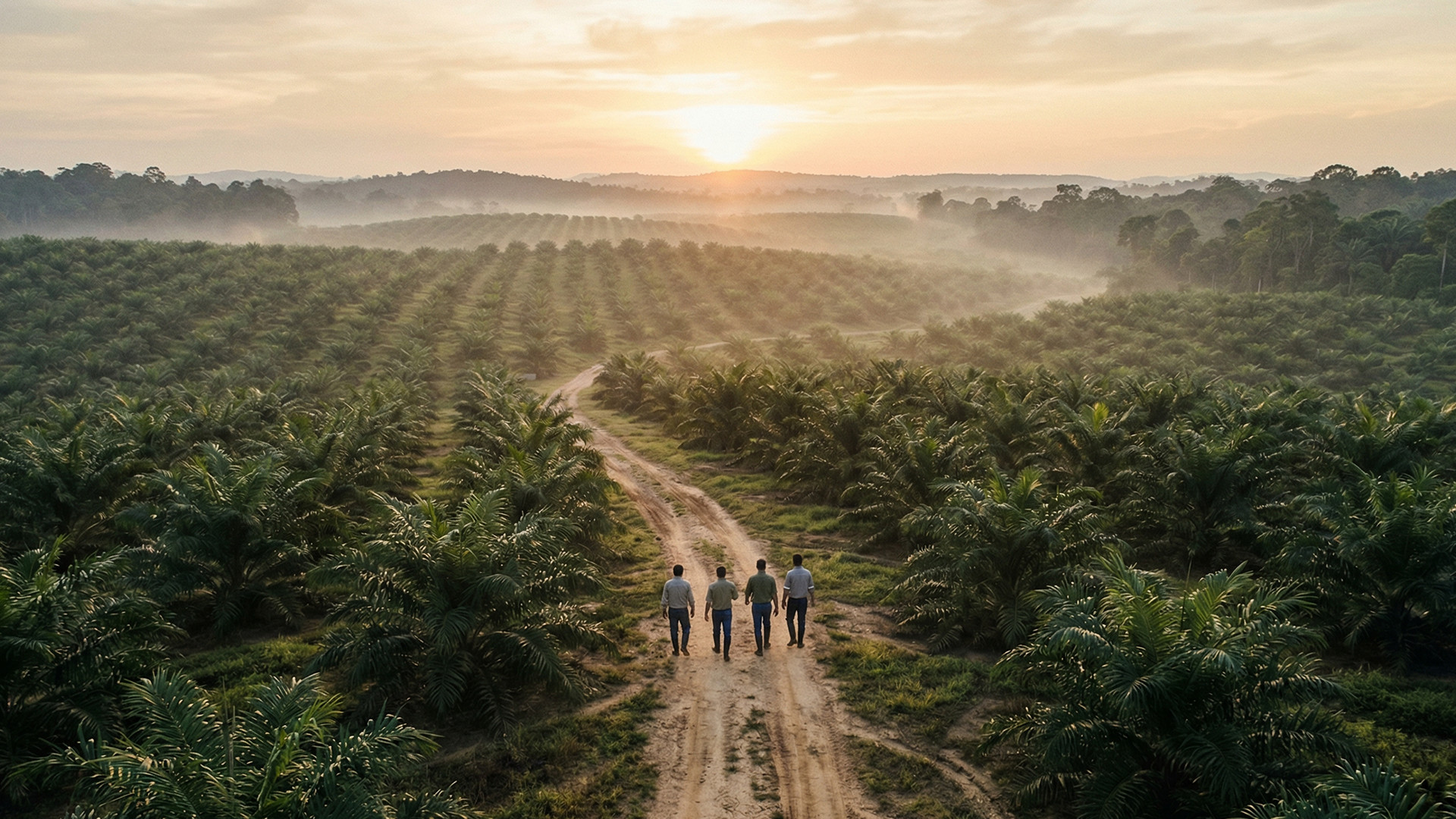
Consistent palm oil production is the result of a meticulously designed landscape structure. This transformation is driven by our R&D teams, who are turning complex biological data into actionable estate management plans.

The true drivers of this progress are our frontline teams. From our estate managers and agronomists to our partners at WWF-Malaysia, it is their daily on-site dedication that translates complex data into tangible field results. Their expertise ensures the resilience of our Landscape Structure, safeguarding everything from soil microbiology to the integrity of our global supply chains.

Moving “Beyond Zero”

The industry is evolving. While compliance remains our essential foundation, we are now building on those standards to enter an era of active restoration.

At SD Guthrie, we are building a future that turns plantation potential into a lasting positive impact. Through our “Beyond Zero” framework, we are committed to three clear outcomes:

  • Healthy Soils and Better Yields: Maintaining soil health to support resilient crop yields while promoting responsible agrochemical use.
  • Positive Environmental Impacts: Supporting biodiversity and conservation, strengthening climate resilience, and improving water management to protect our natural resources.
  • Improved Socio-Economic Impacts: Uplifting the lives and livelihoods of our farmers and their surrounding communities.

By focusing on these outcomes, we are building a future-ready company that delivers value to our shareholders, security to our buyers, and health to the planet.

The transition to regenerative palm oil is a collaborative journey. For more information on our “Beyond Zero” targets or to discuss partnership opportunities within our SD Guthrie framework, get in touch with our team or visit our website:
https://www.sdguthrie-international.com/our-impact/

Let’s unlock nature’s superpower together.

Bringing Tradition, Family and Flavour Together Since 1973

Onam is more than a festival. It is a celebration of family, tradition, gratitude, and togetherness. As loved ones gather around the table to enjoy a festive feast, food plays a central role in creating memories that are cherished across generations.

For many families, coconut and coconut oil are essential ingredients in traditional Onam recipes. From aromatic curries and vegetable dishes to crispy snacks and delicious desserts, coconut oil adds the authentic taste and aroma that define festive cooking.

For over 50 years, C.B.C. Brand Pure White Coconut Oil has been a trusted household companion, helping families create authentic meals with confidence. Made from carefully selected coconuts and containing 100% pure coconut oil with no additives or preservatives, C.B.C. Brand Pure White Coconut Oil delivers the purity, quality, and versatility needed for both traditional recipes and modern cooking.


Why C.B.C. Brand Pure White Coconut Oil for Onam?

Authentic Coconut Aroma
C.B.C. Brand Pure White Coconut Oil is distinguished by its naturally rich coconut aroma, characterised by subtle smoky and nutty notes. This unique sensory profile enhances traditional recipes while harmoniously complementing other ingredients.

Rich and Distinctive Taste
Renowned for its authentic coconut flavour, C.B.C. Brand Pure White Coconut Oil delivers a well-balanced taste profile with gentle sweetness, nuanced smoky and nutty undertones, and a rich aroma that elevates a wide variety of dishes.

Pure and Natural
Crafted from a single ingredient, pure coconut oil, C.B.C. Brand Pure White Coconut Oil contains no additives, preservatives, or artificial ingredients, preserving the natural goodness of the coconut.

Versatile for Traditional and Contemporary Cooking
From preparing a traditional Onam Sadhya to creating wholesome everyday meals and modern fusion dishes inspired by Kerala cuisine, C.B.C. Brand Pure White Coconut Oil offers consistent quality, reliability, and culinary performance for a wide range of cooking applications.

Trusted Across Generations
C.B.C. Brand Pure White Coconut Oil has been a trusted household name, valued for its quality and purity. For generations, it has remained a preferred choice among families across the Gulf Cooperation Council (GCC) and beyond.


Onam Recipes Made Better with C.B.C. Brand Pure White Coconut Oil

Kerala Banana Chips

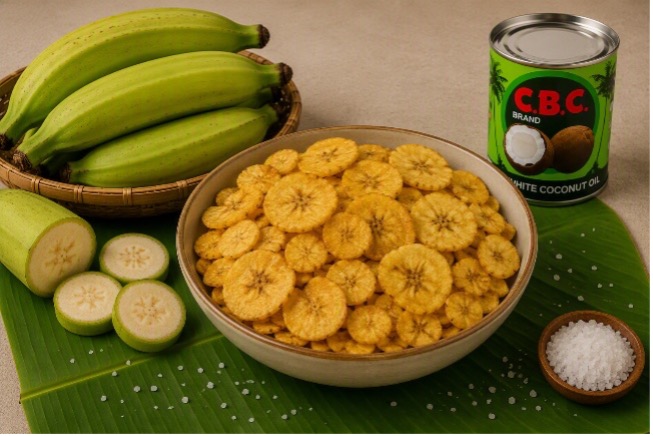
No Onam celebration is complete without upperi, the iconic banana chips served as part of the grand sadhya. Crafted from Kerala’s prized Nendran bananas and traditionally fried in pure coconut oil, these crispy chips are a symbol of the state’s rich agricultural heritage and culinary traditions. Their familiar taste brings back cherished memories of family gatherings, making them a beloved part of the Onam festivities across generations.

Kerala banana chips with raw Nendran bananas and C.B.C. Pure White Coconut Oil on a banana leaf

Key Ingredients

  • 3 Large Raw Nendran Banana (approximately 600-700g, unpeeled)
  • ½ teaspoon Turmeric powder
  • 1 to 2 teaspoons Salt
  • 120ml Water
  • C.B.C. Brand Pure White Coconut Oil

Method

  1. Mix the salt and turmeric powder with 120ml water in a small bowl. Set aside.
  2. Peel the Nendran bananas and slice them thinly (about 1-2mm thick) using a slicer or sharp knife.
  3. Heat the C.B.C. Brand Pure White Coconut Oil in a deep frying pan or wok over medium heat.
  4. To check if the oil is hot enough, drop in one banana slice. If it sizzles and floats, the oil is ready.
  5. Add a handful of banana slices to the hot oil. Do not overcrowd the pan.
  6. While frying, carefully sprinkle 1-2 teaspoons of the salt-turmeric water over the chips. Be careful as the oil may splatter.
  7. Fry for 3-5 minutes, stirring occasionally, until the chips are golden and crispy.
  8. Remove the chips with a slotted spoon and place them on paper towels to drain excess oil.
  9. Let the chips cool completely before serving.

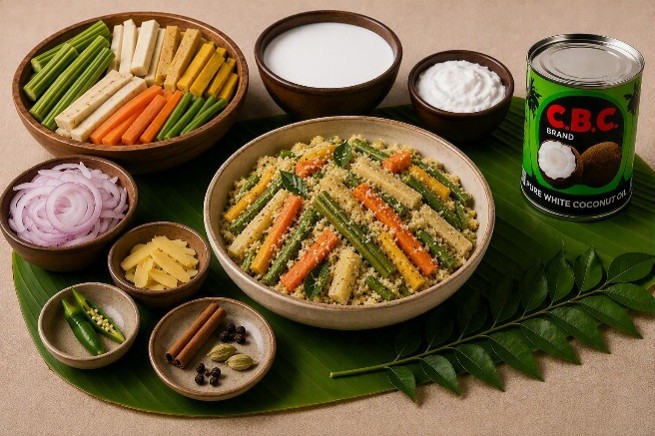
Avial

Avial is an iconic centerpiece of the Onam Sadhya, reflecting Kerala’s rich culinary heritage, cultural identity, and sustainable food traditions. Avial stands as an enduring symbol of clever, zero-waste cooking—demonstrating how humble harvest leftovers can be elevated into a cohesive, flavourful curry.

Avial curry with vegetables, coconut and C.B.C. Pure White Coconut Oil on a banana leaf

Key Ingredients

  • 150g drumstick (moringa pods), cut into 5cm lengths
  • 150g raw banana (green plantain), peeled and cut into long strips
  • 150g yam, peeled and cut into long strips
  • 100g carrot, peeled and cut into long strips
  • 100g French beans, trimmed and cut into 5cm lengths
  • 150g pumpkin, peeled and cut into long strips
  • 60ml water (¼ cup)

For the Coconut Paste

  • 100g fresh grated coconut (about 1 cup)
  • 3 green chilies
  • ¾ teaspoon cumin seeds
  • 2-3 tablespoons water

For Finishing

  • 120g plain yogurt (½ cup), lightly beaten
  • 2 teaspoons C.B.C. Brand Pure White Coconut Oil
  • 1 sprig fresh curry leaves

Method

  1. Add the drumstick (moringa pods), raw banana, yam, carrot, beans, and pumpkin to a large pan with 60ml (¼ cup) water. Cover and cook for 10-12 minutes until the vegetables are tender but not mushy.
  2. While the vegetables cook, blend the grated coconut, green chilies, cumin seeds, and 2-3 tablespoons water into a coarse paste.
  3. Add the coconut paste to the cooked vegetables and mix gently.
  4. Cook for another 2-3 minutes, stirring occasionally, until the vegetables are well coated with the coconut mixture.
  5. Turn off the heat and let the mixture cool for 1-2 minutes. Stir in the beaten yogurt gently.
  6. Drizzle C.B.C. Brand Pure White Coconut Oil over the Avial and add the curry leaves.
  7. Cover and let it rest for 5 minutes to allow the flavours and aroma to develop.

Tip: C.B.C. Pure White Coconut Oil enhances the authentic flavour and aroma of the dish


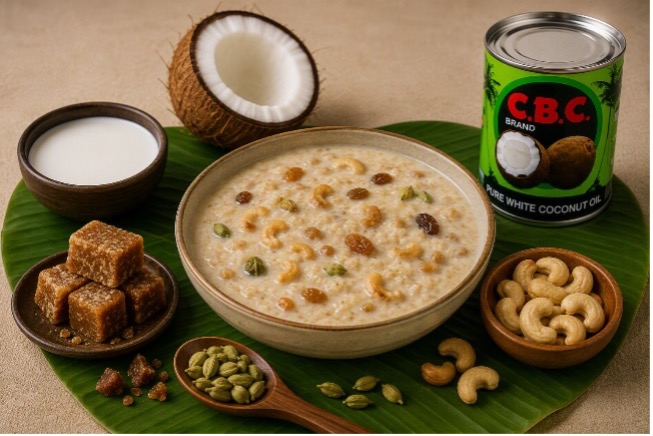
Coconut Payasam (Thengai Payasam)

The ultimate sweet crescendo to the festive feast, coconut payasam. Served toward the end of the meal directly onto the banana leaf, this rich dessert harmonizes the vibrant, savory, and tangy notes of preceding dishes like Sambar, Inji Puli, and Avial.

Deeply rooted in Kerala’s cultural heritage, Payasam originated as Prasada, a sacred temple offering. When prepared at home during Onam, it symbolises gratitude for the season’s harvest, prosperity, and togetherness. A classic Coconut Payasam thoughtfully combines fresh coconut milk, rich jaggery, and aromatic spices to create an unforgettable taste of celebration.

Coconut payasam with grated coconut, jaggery, cashew nuts and C.B.C. Pure White Coconut Oil

Key Ingredients

  • 100g fresh grated coconut
  • 1 tablespoon raw rice (soaked for 20 minutes)
  • 720ml water (divided)
  • 120g powdered jaggery (adjust to taste)
  • ¼ teaspoon cardamom powder
  • 2 tablespoon C.B.C. Brand Pure White Coconut Oil
  • 15-20 cashew nuts
  • 10-15 raisins
  • 60ml thick coconut milk or regular milk (optional, for extra creaminess)

Method

  1. Soak the rice, then blend it with half of the grated coconut and a little water until smooth.
  2. Pour the mixture into a saucepan. Add the remaining grated coconut and water. Cook over low heat, stirring occasionally, until the rice is soft and the mixture thickens.
  3. Add the jaggery and cardamom powder. Stir until the jaggery has completely dissolved.
  4. In a separate pan, heat a little C.B.C. Brand Pure White Coconut Oil and fry the cashew nuts and raisins until golden.
  5. Add the fried cashew nuts and raisins to the payasam and mix well.
  6. Turn off the heat and give it a final stir.


Beyond Tradition: Modern Recipes with C.B.C. Brand Pure White Coconut Oil

Today’s consumers enjoy experimenting with food while staying connected to their roots.

C.B.C. Pure White Coconut Oil is suitable for:

  • Fusion rice bowls
  • Air-fried snacks
  • Coconut-infused grilled chicken
  • Baked pastries and cakes
  • Healthy breakfast bowls
  • Smoothies and wellness recipes

Its versatility makes it easy to incorporate into both traditional celebrations and contemporary lifestyles.


Celebrate the Spirit of Onam with C.B.C. Pure White Coconut Oil

Celebrate the Spirit of Onam with C.B.C. Pure White Coconut Oil

This Onam, gather your loved ones around authentic flavours, cherished traditions, and memorable meals.

From classic Sadhya favourites to modern culinary creations, C.B.C. Pure White Coconut Oil brings the purity, aroma, and versatility needed to make every festive dish special.


For sales and product inquiries, email product.enquiries@sdguthrie.com.

What If the Future of Food Depends on Better Genetics, NOT More Land?

How Do We Feed a Larger World Without Asking Nature to Pay the Price?

Have you ever wondered how we will manage to feed a world that is growing every single day? By the year 2050, it is estimated that the global population will exceed 9 billion people. This presents a significant challenge, as we will need to produce nearly double the amount of food we do today. Historically, the solution was simple, if you needed more food, you cleared more land. For too long, agriculture measured progress by how much land it could take; today, that logic no longer works because every new hectare cleared comes with an environmental cost the planet can no longer afford.

At SD Guthrie, we believe the future of agriculture must be defined not by expansion, but by responsibility. As we mark a decade of GenomeSelect®, we celebrate more than a scientific breakthrough, we celebrate a new pathway to meeting global demand, one that enables us to produce more palm oil sustainably without claiming a single new hectare of forest.

The Science of GenomeSelect®: Identifying the Best from the Start

In 2009, SD Guthrie reached a defining moment in agricultural science when we became the first in the world to map the oil palm genome. More than a scientific milestone, it marked the beginning of a deeper understanding of the crop’s hidden potential, revealing the biological signatures behind traits such as yield, stature, and agronomic strength, and opening the door to a more enlightened approach to cultivation.

From that foundation emerged GenomeSelect® , a DNA-based prediction model born from the belief that the future of agriculture should be shaped by foresight, not chance. By identifying elite-performing palms while they are still in the nursery, GenomeSelect® allows excellence to be recognised at the very beginning of life, long before the field can reveal it. In doing so, it reflects a broader truth: that the most meaningful progress in agriculture lies not in waiting for outcomes, but in having the wisdom to shape them.

Translating Lab Research into Real-World Results

Turning scientific discovery into field-ready impact requires more than technical expertise. It called for long-term vision, scale, and a deep commitment to excellence. To bring GenomeSelect® from research to reality, we established one of Southeast Asia’s largest specialised laboratories and partnered with leading global experts like LGC Biosearch Technologies in the UK. Together, we developed an advanced screening system capable of analysing 80 million genotyping data points, ensuring that only the strongest genetic potential is selected to support a more productive and sustainable future.

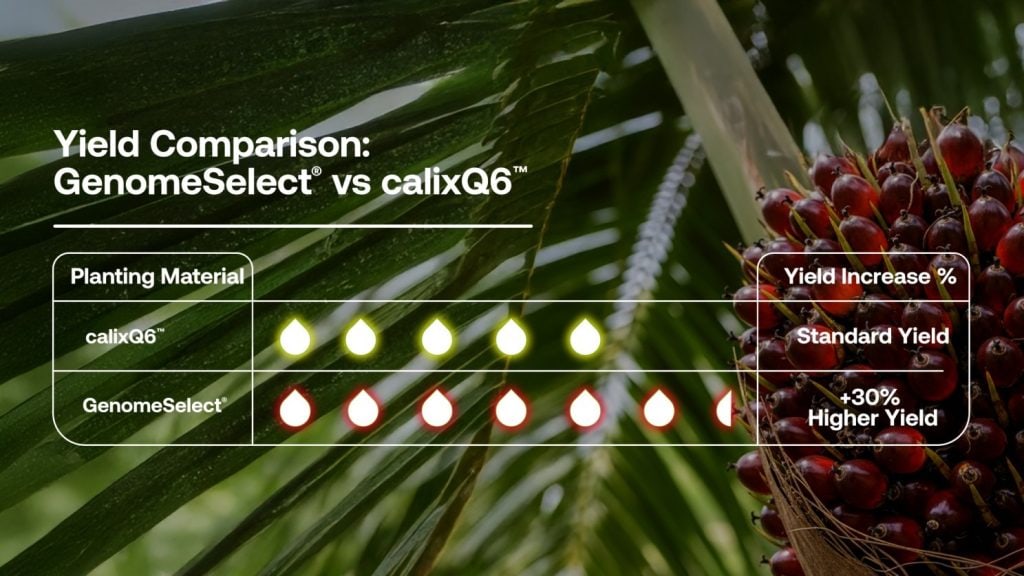
Today, the impact of this work is taking root across thousands of hectares. Where conventional plantations may yield 4 to 6 metric tonnes of oil per hectare, GenomeSelect® palms are demonstrating the potential to reach 5 to 8 metric tonnes showing a powerful reflection of what becomes possible when science, vision, and stewardship come together.

As of 2025, these palms have delivered a 30% increase in oil per hectare compared with our previous best-performing material, calixQ6™, a meaningful leap forward in unlocking more value from every hectare. With around 10% more mesocarp oil in each fruit, they are demonstrating not only stronger performance, but also the remarkable potential of science-led cultivation. From the favourable conditions of coastal estates to the more demanding inland soils, these palms continue to rise above expectation, offering a powerful glimpse of what sustainable progress can truly look like.

Yet the deepest triumph is found not only in the harvest, but in the forests left undisturbed. By unlocking greater productivity from the land we already steward, we lessen the need to take more from the natural world. In doing so, GenomeSelect® speaks to a more hopeful future. One where progress is no longer measured by how much land we claim, but by how much we are able to preserve.

Going Beyond Yield: Building Stronger, Climate Resilient Crops

As of December 2025, GenomeSelect® is no longer a vision of what could be, it is a fieldproven force already being scaled across 24,317 hectares. But yield alone is no longer enough. In an age of climate disruption and rising environmental pressure, agriculture cannot afford to settle for crops that merely perform in ideal conditions. The oil palm of the future must be stronger, smarter, and built to endure. Able not only to produce, but to stand resilient in the face of a changing world.

Using our genetic “route map,” our researchers are now looking beyond just oil yield. We are identifying genetic markers for other vital traits:

  • Climate Resilience: By combining our genetic data with digital tools like remote sensing and geospatial technologies (GIS), we can develop a new genetic prediction model to select palms that can maintain high productivity even when the weather turns harsh.
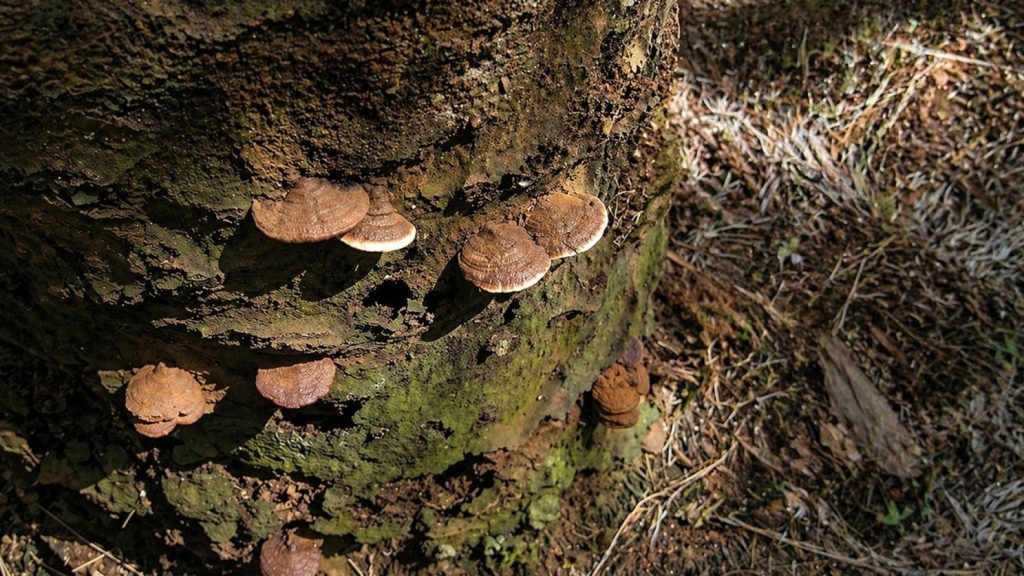
  • Disease Resistance: We are also tackling Ganoderma, a devastating fungus that can destroy entire plantations. We have developed models to select palms that are naturally more tolerant to this threat, ensuring the long-term yield health of our estates.
  • Easier Harvesting: We are even looking at the physical structure of the palm. By breeding palms that are easier to harvest or grow at a more manageable height, we can make the work on the ground safer and less labour-intensive for our teams.
Example of Ganoderma infection at the base of an oil palm.

A Global Vision: Sharing the Blueprint

In Sharing Knowledge, We Shape Tomorrow

At SD Guthrie, we believe progress of lasting value must be shared. Protecting the world’s forests is not the work of one company alone, but a responsibility that calls for collective action across the industry.

In 2020, we made the decision to publish our genome research in the public domain. Our version of the oil palm genome was 80% more complete than anything previously available to the public. By sharing this “blueprint” with other producers, academic researchers, and even small-scale farmers, this “open science” approach means that the entire industry can start moving toward higher yields and better land use. Interestingly, the same technology we use for oil palms is now being used as a reference to help improve other crops, such as date palms and coconuts.

The Road to 2050: A New Standard for Productivity

Our ultimate goal is to reach a step change in how we operate. By 2050, we want to achieve a target of 8 to 9 metric tonnes of oil per hectare at the company level.

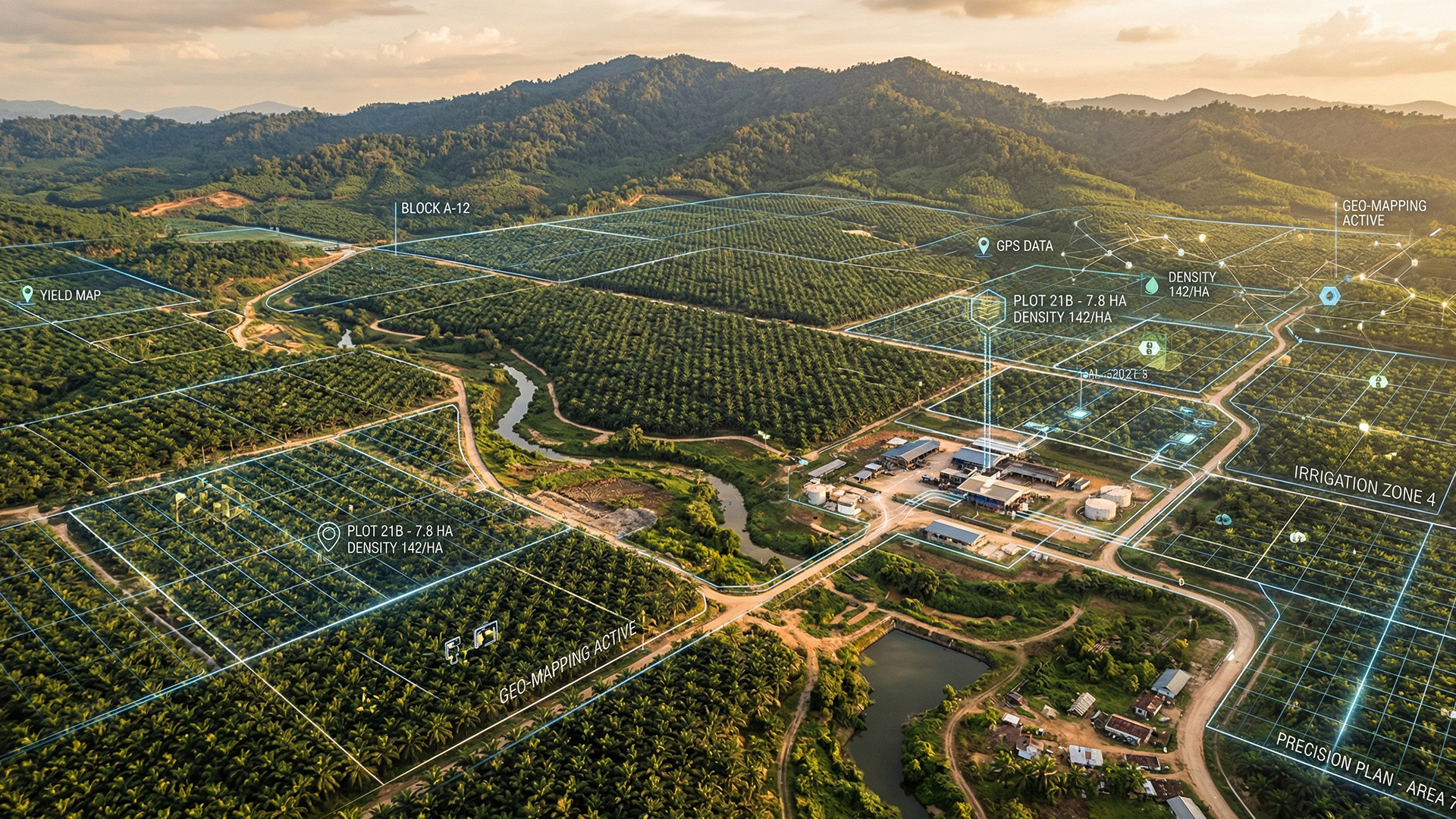
Achieving this requires us to connect the work from the lab directly to the field. This is where precision agriculture comes in to improve agronomic and milling practices.

This involves:

  • Drone and Satellite Imaging: To monitor growth rates and detect nutrient deficiencies or pest outbreaks early.
  • Internet of Things (IoT): Ground sensors and automated weather stations that provide real-time data to estate managers.
  • Milling Innovation: Utilising enzymes and advanced data analytics in refineries to optimise oil extraction and ensure food safety through the “One Stream” approach — an integrated model that unifies the entire value chain from plantation to customer.
  • Mechanisations for Pest and Disease Control: Deploying automated spraying systems and mechanised application technologies to address biological threats with surgical accuracy, reducing manual intervention, and chemical footprint.
  • Field Upkeep: Employing specialised machinery and autonomous equipment for ground cover management and terrace upkeep to ensure optimal palm health and soil integrity.
  • Crop Evacuation: Integrating mechanised loading systems and real-time transit tracking to accelerate the movement of fresh fruit bunches from the field to the mill, preserving oil quality and reducing fruit loss.

Decoding A Deforestation-Free Future

The challenge of feeding more than 9 billion people while driving the conservation of our world’s most precious landscapes is a global imperative. In the next 15 to 20 years, as we replant our Malaysian estates with these elite materials, we expect to produce an additional 300,000 metric tonnes of oil annually. That is enough to feed 15 million people, and it is equivalent to the output of 50,000 hectares of land that will never need to be cleared – safeguarding vital ecosystems, thus preserving nature.

At SD Guthrie, we believe the greatest innovations are those that reach beyond achievement and become a force for collective good. The challenge of nourishing a growing world while protecting the landscapes that sustain it is far too important for any one organisation to carry alone. It calls for minds united by purpose, and partnerships guided by responsibility. To all who share this vision, we welcome the opportunity to stand together, to shape a future where abundance is created not at nature’s expense, but in harmony with it.

Traceability: The New Frontier of Palm Oil Quality

No More Anonymous Ingredients.

For decades, palm oil operated in the shadows as a “ghost ingredient.” It powered everything from chocolates to biofuels, yet moved through global supply chains as an anonymous commodity. In that era, “quality” was confined to the laboratory, defined by melting points and oxidative stability. If the chemistry was right, the origin was irrelevant.

The Era of Absolute Visibility

That era is over. The definition of a “premium” ingredient has fundamentally shifted. Today, the market demands the story behind every drop.

For the modern manufacturer, transparency is no longer a corporate social responsibility metric, but a competitive necessity. Without ironclad sourcing data, businesses face existential risks to ESG ratings, access to sustainable capital, and compliance with landmark shifts like the EU Deforestation Regulation (EUDR).

The SD Guthrie International Standard

In a world where consumers trace their morning coffee back to the exact farm, the fats and oils in their pantry are now held to that same standard of integrity. While palm oil was once a faceless commodity, today’s market scrutinises every hectare.

At SD Guthrie International, we believe traceability is no longer a “nice-to-have” initiative. It is the new benchmark of product excellence and the ultimate differentiator for long-term business confidence. Moving from just providing high-quality oil, to providing the radical transparency your brand deserves.

“Knowing” and “Seeing”

To the non-expert, “traceability” might sound like industry jargon. But for a global business protecting its reputation, the distinction between different levels of oversight is the thin line between a future-proofed supply chain and a compliance nightmare.

At SD Guthrie International, we distinguish between two critical levels of visibility:

  • Traceability to Mill (TTM): This identifies the processing hub (the mill) where the fresh fruit bunches (FFB) were crushed into oil. For many years, TTM was considered the industry limit.
  • Traceability to Plantation (TTP): This is the “gold standard.” It means we can trace the oil back to the exact land where the oil palm was grown. In the context of the EUDR, this requires precise geolocational data, not just a point on a map, but a “polygon” that defines the boundaries of the farm.

It is vital to distinguish between traceability and transparency. Traceability is the ‘engine,’ the technical capability to track a product’s journey. Transparency is the ‘driver,’ the courage to lay that data bare for the world to see.

In today’s landscape, we believe the credibility of No Deforestation, No Peat, and No Exploitation (NDPE) standards depends on a vision that looks past direct suppliers. We are intentionally and diligently choosing to address potential blind spots in the indirect network to ensure there is no compromise to our brand’s integrity.

The stakes for our global partners are absolute. You cannot claim your products are “deforestation-free” if you are operating on guesswork. We recognise the staggering complexity of the palm network, made from a web of thousands of intermediaries and smallholders. By partnering with SD Guthrie International and prioritising TTP, you are securing a fully-vetted supply chain. We take on the heavy lifting of global due diligence, so you can lead your market with total confidence.

The SD Guthrie International Blueprint: From Ambition to Evidence

At SD Guthrie International, theoretical targets are a thing of the past. We are delivering the measurable, high-impact results that the global market demands.

The Gold Standard: Papua New Guinea and the Solomon Islands

Our operations in Papua New Guinea and the Solomon Islands (via New Britain Palm Oil Limited) now serve as the global blueprint for the industry. In these regions, we have achieved a milestone for SD Guthrie-owned mills many thought impossible: 100% traceability to the plantation. Every single hectare feeding our mills is mapped, monitored, and verified in real-time. Not to be confused with a pilot programme or a future goal. This is a reality we live in that proves total visibility is achievable today.

Scaling the Solution

The frontier is now Malaysia and Indonesia. While these landscapes are more complex, rather than being a barrier, they serve as the next phase of our mission. We are currently deploying the same rigorous mapping standards perfected in Papua New Guinea across these regions, engineering a system where 100% traceability is the non-negotiable standard for every tonne we produce.

A Partnership of Certainty

By laying our metrics bare, we provide our partners absolute certainty. We invite you to align your sustainability roadmap with a leader that not only promises change, but drives it. When you choose SD Guthrie International, you are choosing a partner who has already done the hard work of proving what’s possible.

The Science of Certainty: Engineering the Traceable Asset

How do we transform a standard “commodity” into a high-value traceable asset? It demands a rigorous, data-driven methodology that interrogates every stage of the journey. SD Guthrie International measures traceability across four specific categories of volume supplied to our refineries and palm kernel crushers:

  1. Crude Palm Oil (CPO)
  2. Palm Kernel (PK)
  3. Crude Palm Kernel Oil (CPKO)
  4. Refined Palm Products

To be classified as “traceable,” a supplier must provide a comprehensive data profile:

  • The Parent Company Identity: We need to know who owns the mill to ensure there are no links to unethical groups.
  • RSPO Certification Status: Verification that the oil meets the world’s most recognised sustainability standards.
  • Precise GPS Polygons: As required by the EUDR, we need the actual boundaries of the plantation to cross-reference with satellite imagery.

Real-Time Vigilance: The Satellite Shield

Data is only the first step, truth is found through Satellite Monitoring. We secure our supply chain through strategic partnerships with organisations like Earthqualizer and the integration of the RADD (Radar Alerts for Detecting Deforestation) system.

While traditional satellite imagery is often blinded by the tropics, our radar technology penetrates cloud cover, providing an unblinking, 24/7 view of the landscape, even during the most intense rainy seasons. If a single hectare is cleared within our sourcing area, we will know within days. This rapid-response capability allows for immediate intervention, providing the absolute certainty required to insulate a global brand from risk in today’s landscape.

Radical Accountability: The Power of Crosscheck

Confidence is built on visibility, and visibility requires courage. This is why SD Guthrie International launched Crosscheck in 2019: an industry-leading, publicly accessible traceability engine that redefined the standards of openness.

Crosscheck is an open invitation – stripping away the corporate veil, inviting our customers, NGOs, and global regulators to scrutinise exactly how our supply chain operates in real-time. By providing this level of unprecedented access, your trust is earned through verifiable, accessible truth.

Direct capture from Crosscheck, our online traceability dashboard.

Crosscheck allows any user to:

  • Locate Every Supplying Mill: View a global map of the mills that feed our refineries.
  • Access Risk Assessments: View detailed environmental and social risk ratings for each mill.
  • Monitor NDPE Compliance: Track exactly how our third-party suppliers are performing against our “No Deforestation” commitments.

For businesses preparing for the EUDR, Crosscheck provides the transparency documentation needed to prove compliance. In September 2024, SD Guthrie International successfully delivered a landmark shipment of 24,250 MT of EUDR-compliant palm oil to our Zwijndrecht refinery in the Netherlands. Proving our technology can successfully move responsibly sourced oil into regions with the world’s toughest regulations.

The Power of Inclusion: Why Integration Trumps Exclusion

The final frontier of the palm oil industry lies in the “indirect supply” – the hundreds of thousands of independent smallholders who power the global market.

The “easy” path to a 100% traceable supply chain is a path of exclusion. By simply cutting these smallholders out. While large estates are easier to map, absolute exclusion is a false victory. It devastates rural livelihoods and drives farmers toward unregulated markets, effectively shifting deforestation elsewhere rather than solving it.

Inclusive Traceability: Empowerment Through Data

At SD Guthrie International, we reject the easy path in favour of the inclusive path. We believe traceability should be a tool for empowerment, not a barrier to entry. Our strategy is built on inclusive traceability, choosing to integrate smallholders into the global economy rather than leaving them behind.

Through high-impact partnerships, such as our work with Solidaridad and Colgate-Palmolive in Bera, Pahang, we are actively bringing smallholders into our digital ecosystem. Securing their future and ensuring that every link in the SD Guthrie International chain, no matter how small, meets the highest global standards of integrity.

Through these programmes, we provide:

  • Technical Training: Helping farmers adopt Good Agricultural Practices (GAP) to increase yields.
  • Yield Improvements: In some cases, smallholders have seen yield increases of up to 35%, significantly boosting their income without expanding their land footprint.
  • Market Access: By helping smallholders achieve MSPO (Malaysian Sustainable Palm Oil) or RSPO certification, we ensure they can continue to sell into the global market.

Engineering Resilience

Bridging the visibility gap for smallholders is the most difficult challenge in sustainability, but it is the only path to a truly resilient industry. At SD Guthrie International, we refuse to take the easy path of exclusion.

By choosing SD Guthrie International, you are partnering with a leader that transforms complexity into clarity, ensuring your brand is built on a foundation of both ethical integrity and absolute transparency.

Restoring the Future with The “Beyond Zero” Framework

The “Beyond Zero” framework is our roadmap for the future. We’ve moved past the era of simply “doing no harm.” In a world facing climate and biodiversity crises, neutrality is no longer enough. The challenges of climate change and biodiversity loss require a “Nature Positive” approach – to actively restore the ecosystems that sustain our industry.

Under our “Restore” pillar, SD Guthrie International has committed to:

  • Large-scale Reforestation: We have already planted over 2.7 million trees as of FY2024.
  • Biodiversity Conservation: Our target is to conserve or restore 100,000 hectares of land across our sourcing landscapes by 2030.
  • Regenerative Agriculture: We are developing frameworks to improve soil health and reduce chemical inputs, ensuring that the land remains productive for generations to come.

Data with Purpose

Our commitment to restoration is what gives our traceability data its power. It is the evidence of a business model designed to actively repair the environment and not just monitor its decline. For our partners, every tonne of SD Guthrie International oil is a direct investment in the global effort to restore and protect the natural world.

Traceability Unlocks A Strategic Advantage for Your Brand

Choosing SD Guthrie International gives you a strategic edge that generic palm oil cannot match. We offer:

  • Guaranteed Market Access: New laws like the EUDR will soon block products without precise sourcing data. We provide the “passport” your products need to enter global markets without delay.
  • Independent ESG Proof: You don’t have to take our word for it. In 2025, we were ranked #1 globally on the SPOTT index with a score of 97.5%. This independent verification proves we are the industry standard for transparency.
  • Proactive Risk Management: We resolve issues openly through our public Grievance Tracker. In 2024, we maintained a 93% resolution rate, protecting your brand from unexpected reputational risks.

In a market that often focuses only on price, SD Guthrie International partners compete on documented trust. Oil that is satellite-monitored, verified, and ethical.

Traceability: The New Definition of Quality

The palm oil narrative has shifted. The history of a product is now as vital as the product itself. At SD Guthrie International, we’ve reframed traceability from a technical requirement into a core component of product value.

By merging global scale with the precision of our Crosscheck dashboard and the ambition of our “Beyond Zero” framework, we deliver a future-ready supply chain for the global market.

The future belongs to those who are willing to be seen. SD Guthrie International provides the high-volume supply you need with the high-integrity data your brand demands. We give you total control over your ingredients, your costs, and your reputation.

Secure your future with a transparent, resilient supply chain.

Contact our SD Guthrie International partnership team today for more information on how we can tailor a solution for your production line.

How Cocoa Butter Substitute (CBS) is Redefining Efficiency in a Volatile Chocolate Market

The Cocoa Dilemma: Why Tradition is Becoming a Liability

In the world of confectionery, tradition has always been king. For decades, the industry has held onto the idea that cocoa butter is the only “true” path to premium quality. But in today’s volatile market, relying exclusively on tradition is becoming a dangerous financial strategy.

The reality is stark, the cocoa market is in turmoil. Prices are fluctuating wildly, supply chains are straining under the weight of climate change and geopolitical pressure, and manufacturers are left absorbing the costs. For the modern confectioner, the “purity” of cocoa butter comes with a heavy price tag. Not just in raw material costs, but in operational complexity and supply uncertainty.

This brings us to a commercial reality. Cocoa Butter Substitutes (CBS) are no longer just the “budget” option. They are the smart option.

While the Western market has historically been slow to adopt substitutes due to lingering perceptions about texture, the Middle East and Asian markets have been leveraging these solutions for years to drive profitability and product resilience. They understood early on that in a global market, consistency beats “purity,” and functional performance pays dividends that tradition cannot.

At SD Guthrie, we are seeing a shift. The stigma is fading as the technology improves. We are moving past the era of waxy, inferior substitutes and entering an era where CBS offers a strategic advantage. Total control over your production line, your costs, and your final product’s performance.

What is a Cocoa Butter Substitute (CBS)? The Chemistry of Efficiency

To understand why CBS is the solution, we have to strip away the romanticised ideals of chocolate making and look at the actual chemistry. This is where the difference between profit and loss often sits.

Cocoa butter is a difficult ingredient, due to it being a temperamental fat. It is polymorphic, meaning it can crystallise in several different forms. Only one of those forms (Form V) gives you the snap and gloss consumers want. Achieving that requires tempering. A precise, energy-intensive process of heating and cooling that demands specialised machinery and constant vigilance. If the temperature wavers by a single degree, the product blooms, turning grey and unappetising.

Cocoa Butter Substitutes (CBS) rewrite these rules.

Derived primarily from Lauric oils (like Palm Kernel Oil), CBS is engineered to bypass the tempering process entirely. Unlike cocoa butter, which requires coaxing to crystallise correctly, CBS is a rapid-crystallising fat. It sets directly into a stable form without the need for thermal cycling.

The Operational Advantage

For a manufacturer, this shift is transformative. By switching to a high-quality CBS, you eliminate the tempering stage of your production line.

  • Energy Savings: You stop heating and cooling massive tanks of chocolate mass.
  • Throughput Speed: Your cooling tunnels can run faster because CBS sets sharper and quicker than cocoa butter.
  • Reduced Waste: You eliminate the risk of “bad batches” caused by poor tempering.

But the definition of a modern CBS goes beyond “ease of use.” It is about versatility. In the past, CBS was a blunt instrument, a single fat profile that offered hardness but little else. Today, through fractionation and hydrogenation, we can manipulate the triglyceride profiles to mimic the exact melting curve of cocoa butter, or deviate from it intentionally to solve specific problems.

Whether you are a newcomer to the market looking to set up a lean production line, or an established player trying to protect your margins from cocoa inflation, CBS offers a level of predictability that the cocoa bean simply cannot match.

SD Guthrie’s CBS. The Pragmatic Alternative.

Not all palm oil is created equal, and by extension, not all CBS is created equal.

The stigma of “waxy” mouthfeel often comes from generic, off-the-shelf fats that prioritise hardness over eating quality. At SD Guthrie, we approach CBS as a premium functional ingredient. To not just supply fat, but instead supply a tailored melting profile.

Global Scale, Local Precision

Our footprint speaks to our reliability. In 2024 alone, our monthly CBS production capacity stood at 1,500 MT. But more importantly, we are deploying this volume where the market needs it most:

  • 38% to Latin America and North America
  • 23% to the Middle East
  • 22% to South Asia
  • The remainder serving China, Southeast Asia, New Zealand, and Australia.

This global distribution network reflects a crucial reality. That we are not just a typical supplier, but instead a logistics partner. In an industry where a delayed shipment can shut down a factory, our ability to route product through multiple global hubs ensures that your supply chain remains unbroken, regardless of regional disruptions.

The “KEMCOA” Advantage

Our portfolio is designed for flexibility. With more than seven active product ranges, including our flagship KEMCOA series, we offer a level of customisation that is rare in the bulk fats market.

Standard cocoa butter has one fat profile. You get what the bean gives you. SD Guthrie International’s CBS systems allow for distinct formulations:

  • Lecithin Options: We offer soy-based or allergen-free sunflower lecithin, allowing you to cater to clean-label demands.
  • Additive Levels: We can adjust formulations to align with strict destination country regulations, ensuring your product is compliant before it even leaves our refinery.
  • Custom Blending: We can tailor the fat composition to prioritise specific traits. Whether that is a steeper melting curve for a sharper “snap” or a slightly softer profile for better flavour release.

Looking Ahead: The Sei Mangkei Expansion

Not resting on our current capacity, we are currently constructing a new state-of-the-art refinery in Sei Mangkei, Indonesia.

Once operational, this facility will house a dedicated CBS production capacity of 300 MT per day. This is a significant leap forward from our existing facility in PGR. The Sei Mangkei refinery represents a major advancement in our production capabilities, designed from the ground up to handle high-specification fractionation with greater energy efficiency. It reinforces our commitment to innovation and strengthens our position as a leading global supplier ready to meet growing demand with scale.

Real-World Performance and Solving the “Tropical Problem”

One of the greatest limitations of traditional cocoa butter is its melting point. It melts at body temperature (around 34°C–37°C). This is perfect for mouthfeel, but it is a logistical nightmare for distribution in tropical climates.

If you are shipping chocolate to the Middle East, Southeast Asia, or Latin America, relying on pure cocoa butter means you are at the mercy of the cold chain. If a truck’s refrigeration fails for an hour, or if a retailer displays the product on a warm shelf, the product melts, blooms, and becomes unsellable.

Heat Resistance by Design

This is where SD Guthrie International’s CBS shines. Because we engineer the fat profile, we can tailor the heat resistance.

We can push the melting point higher than natural cocoa butter without destroying the eating experience. By carefully selecting specific Lauric fractions, we create a compound coating that remains stable at higher ambient temperatures, perfect for markets where 30°C+ days are the norm.

  • The “Clean Snap”: One of the hallmarks of a premium chocolate experience is the audible “snap” when you break a bar. Often, cheap substitutes feel like bending plastic. Our formulations are designed to retain that brittle, premium snap, even in warmer conditions.
  • Oxidative Stability: Lauric fats are naturally more resistant to oxidation than many unsaturated fats. This translates to a longer shelf life for your finished product, reducing waste at the retail level.
  • Gloss Retention: Because CBS crystallises so rapidly and stably, it maintains a high-gloss finish longer than cocoa butter, which can dull over time if not tempered perfectly.

For the manufacturer, this means you can expand into new, warmer markets without investing in an ultra-expensive deep-frozen supply chain. You can put your product on shelves in Jakarta, Dubai, or Mexico City with confidence that the consumer will experience the texture you intended.

The intention is not to “cheapen” the product, but to fortify it against the realities of the global environment.

Sustainability, Market Relevance, and Making the Ethical Choice

There is a misconception that moving away from cocoa butter is a step backward for sustainability. In reality, the cocoa supply chain is currently facing humanitarian and environmental reckoning. Issues of forced labour, deforestation, and unsustainable harvesting practices are rampant in the cocoa belts of West Africa.

Palm oil, when sourced responsibly, offers a transparent and ethical alternative.

Beyond Zero: Our Commitment

At SD Guthrie, sustainability is an operational mandate. Our approach is encapsulated in our “Beyond Zero” strategy – a shift from simply minimising harm to actively restoring nature and transforming lives, ensuring our business growth leaves the world better than we found it.

This commitment to absolute visibility across our global supply chain has secured us the #1 Global Ranking on the SPOTT assessment (Sustainability Policy Transparency Toolkit). Establishing ourselves as the highest-ranked transparent ESG brand in the industry.

This ranking independently verifies our operational integrity. By sourcing from SD Guthrie, you align your supply chain with the industry’s global benchmark for transparency and integrity.

As one of the world’s largest producers of RSPO-certified sustainable palm oil, we offer full traceability.

  • No Deforestation, No Peat, No Exploitation (NDPE): We rigorously enforce these standards across our entire supply chain.
  • Ethical Sourcing: Unlike the opaque supply chains of the cocoa market, our vertical integration allows us to trace our oil back to the mill and the estate.

The Plant-Based Revolution

CBS is perfectly positioned for the booming plant-based market. As consumers demand dairy-free and vegan confectionery, manufacturers are looking for fats that provide the creamy mouthfeel of milk chocolate without the milk.

Our Lauric CBS solutions are 100% plant-based and can be formulated to replicate the creamy texture of dairy fats, allowing you to create vegan “milk” chocolate products that satisfy the indulgence factor without the animal ingredients.

In an era where consumers are scrutinising labels for both environmental impact and ethical sourcing, swapping volatile cocoa butter for RSPO-certified CBS is a narrative win. It allows brands to tell a story of reliability, safety, and verified sustainability.

The Future is Functional

The confectionery industry is at a crossroads. On one path lies the traditional reliance on cocoa butter, a path fraught with price spikes, supply shortages, and high processing costs. On the other path lies the functional future: Cocoa Butter Substitutes.

Where CBS used to be associated with compromise. It is now about precision.

  • Cost Efficiency: It insulates your bottom line from the chaos of the cocoa market.
  • Stable Supply: With SD Guthrie’s 1,500 MT/month capacity (and the upcoming Sei Mangkei refinery adding 300 MT/day), you have a partner who can scale with you.
  • Superior Functionality: From heat resistance in the tropics to skipping the tempering process in the factory, CBS solves operational headaches that have plagued chocolatiers for a century.

At SD Guthrie, we are defining what the future looks like by combining the scale of a global giant with the flexibility of a custom partner. Whether you need a heat-resistant coating for a summer launch in Brazil or a high-gloss glaze for a donut line in Europe, we have the formulation, and the supply chain, to make it happen.

Don’t let market volatility dictate your product strategy.

Take control of your ingredients, your costs, and your quality.

Ready to explore the potential of CBS? Contact our SD Guthrie partnership team today for more information on how we can tailor a solution for your production line.
Here’s Why We’re the Official Sustainability Partner of the Rainforest World Music Festival 2025 (RWMF)

SD Guthrie International is proud to be the Official Sustainability Partner of the Rainforest World Music Festival 2025. This partnership is rooted in shared values:


  1. Preserving cultural heritage
  2. Protecting biodiversity
  3. Empowering local communities


RWMF provides a global stage for sustainable celebration, and SDGI is honoured to walk alongside it.


We’re also introducing the Palm Oil-Powered Circular Kitchen Initiative, a closed-loop system that turns used cooking oil into new value, reflecting our commitment to responsible production and a circular economy.


At the festival’s Rainforest Youth Summit (RAYS), Elaine Chan, our Head of Climate Change and Reporting, will speak on youth-driven climate resilience, connecting our leadership in sustainability with tomorrow’s changemakers.


Because when it comes to palm oil, we believe in responsibility, transparency, and positive impact.


Not All Palm Oil Is Created Equal.


Sarawak Cultural Village
June 20 – 22, 2025