How Do We Feed a Larger World Without Asking Nature to Pay the Price?
Have you ever wondered how we will manage to feed a world that is growing every single day? By the year 2050, it is estimated that the global population will exceed 9 billion people. This presents a significant challenge, as we will need to produce nearly double the amount of food we do today. Historically, the solution was simple, if you needed more food, you cleared more land. For too long, agriculture measured progress by how much land it could take; today, that logic no longer works because every new hectare cleared comes with an environmental cost the planet can no longer afford.
At SD Guthrie, we believe the future of agriculture must be defined not by expansion, but by responsibility. As we mark a decade of GenomeSelect®, we celebrate more than a scientific breakthrough, we celebrate a new pathway to meeting global demand, one that enables us to produce more palm oil sustainably without claiming a single new hectare of forest.
The Science of GenomeSelect®: Identifying the Best from the Start
In 2009, SD Guthrie reached a defining moment in agricultural science when we became the first in the world to map the oil palm genome. More than a scientific milestone, it marked the beginning of a deeper understanding of the crop’s hidden potential, revealing the biological signatures behind traits such as yield, stature, and agronomic strength, and opening the door to a more enlightened approach to cultivation.
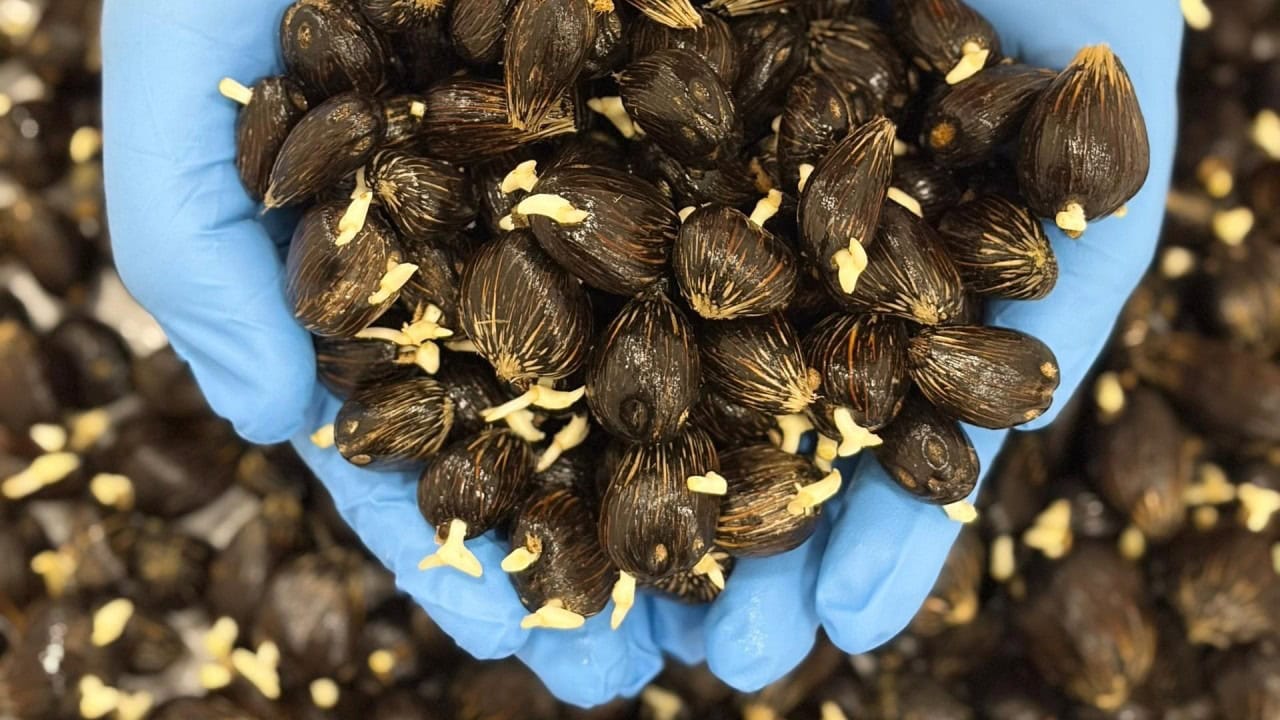
From that foundation emerged GenomeSelect® , a DNA-based prediction model born from the belief that the future of agriculture should be shaped by foresight, not chance. By identifying elite-performing palms while they are still in the nursery, GenomeSelect® allows excellence to be recognised at the very beginning of life, long before the field can reveal it. In doing so, it reflects a broader truth: that the most meaningful progress in agriculture lies not in waiting for outcomes, but in having the wisdom to shape them.
Translating Lab Research into Real-World Results
Turning scientific discovery into field-ready impact requires more than technical expertise. It called for long-term vision, scale, and a deep commitment to excellence. To bring GenomeSelect® from research to reality, we established one of Southeast Asia’s largest specialised laboratories and partnered with leading global experts like LGC Biosearch Technologies in the UK. Together, we developed an advanced screening system capable of analysing 80 million genotyping data points, ensuring that only the strongest genetic potential is selected to support a more productive and sustainable future.
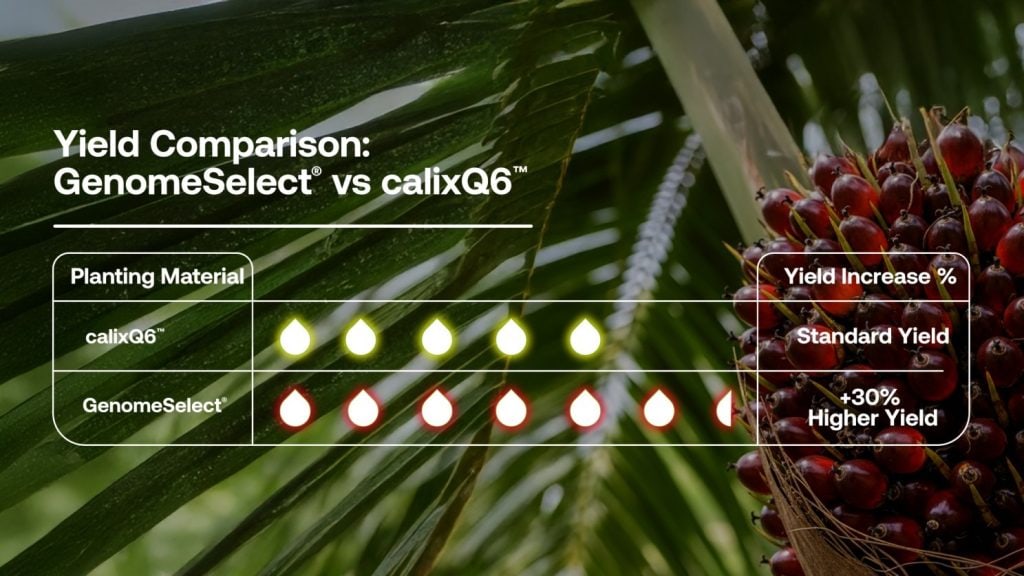
Today, the impact of this work is taking root across thousands of hectares. Where conventional plantations may yield 4 to 6 metric tonnes of oil per hectare, GenomeSelect® palms are demonstrating the potential to reach 5 to 8 metric tonnes showing a powerful reflection of what becomes possible when science, vision, and stewardship come together.
As of 2025, these palms have delivered a 30% increase in oil per hectare compared with our previous best-performing material, calixQ6™, a meaningful leap forward in unlocking more value from every hectare. With around 10% more mesocarp oil in each fruit, they are demonstrating not only stronger performance, but also the remarkable potential of science-led cultivation. From the favourable conditions of coastal estates to the more demanding inland soils, these palms continue to rise above expectation, offering a powerful glimpse of what sustainable progress can truly look like.
Yet the deepest triumph is found not only in the harvest, but in the forests left undisturbed. By unlocking greater productivity from the land we already steward, we lessen the need to take more from the natural world. In doing so, GenomeSelect® speaks to a more hopeful future. One where progress is no longer measured by how much land we claim, but by how much we are able to preserve
(“SD Guthrie’s GenomeSelect® journey began in 2009 with the sequencing, assembly, and annotation of the oil palm genome; over the next seven years, iterative improvements to this reference genome laid the foundation for GenomeSelect® development, integrating large-scale data analytics with breeding programmes to build a DNA-based prediction model for superior oil-yield traits.”– this client comment has been restructured into the above to accommodate a more mass audience.)
Going Beyond Yield: Building Stronger, Climate Resilient Crops
As of December 2025, GenomeSelect® is no longer a vision of what could be, it is a fieldproven force already being scaled across 24,317 hectares. But yield alone is no longer enough. In an age of climate disruption and rising environmental pressure, agriculture cannot afford to settle for crops that merely perform in ideal conditions. The oil palm of the future must be stronger, smarter, and built to endure. Able not only to produce, but to stand resilient in the face of a changing world.
Using our genetic “route map,” our researchers are now looking beyond just oil yield. We are identifying genetic markers for other vital traits:
- Climate Resilience: By combining our genetic data with digital tools like remote sensing and geospatial technologies (GIS), we can develop a new genetic prediction model to select palms that can maintain high productivity even when the weather turns harsh.
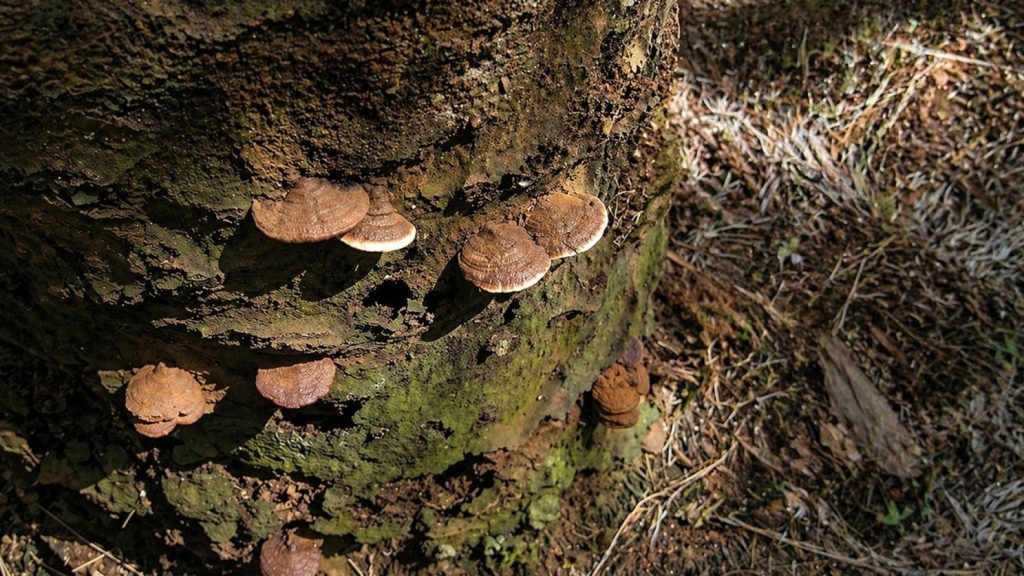
- Disease Resistance: We are also tackling Ganoderma, a devastating fungus that can destroy entire plantations. We have developed models to select palms that are naturally more tolerant to this threat, ensuring the long-term yield health of our estates.
- Easier Harvesting: We are even looking at the physical structure of the palm. By breeding palms that are easier to harvest or grow at a more manageable height, we can make the work on the ground safer and less labour-intensive for our teams.
A Global Vision: Sharing the Blueprint
In Sharing Knowledge, We Shape Tomorrow
At SD Guthrie, we believe progress of lasting value must be shared. Protecting the world’s forests is not the work of one company alone, but a responsibility that calls for collective action across the industry.
In 2020, we made the decision to publish our genome research in the public domain. Our version of the oil palm genome was 80% more complete than anything previously available to the public. By sharing this “blueprint” with other producers, academic researchers, and even small-scale farmers, this “open science” approach means that the entire industry can start moving toward higher yields and better land use. Interestingly, the same technology we use for oil palms is now being used as a reference to help improve other crops, such as date palms and coconuts.
The Road to 2050: A New Standard for Productivity
Our ultimate goal is to reach a step change in how we operate. By 2050, we want to achieve a target of 8 to 9 metric tonnes of oil per hectare at the company level.
Achieving this requires us to connect the work from the lab directly to the field. This is where precision agriculture comes in to improve agronomic and milling practices.
This involves:
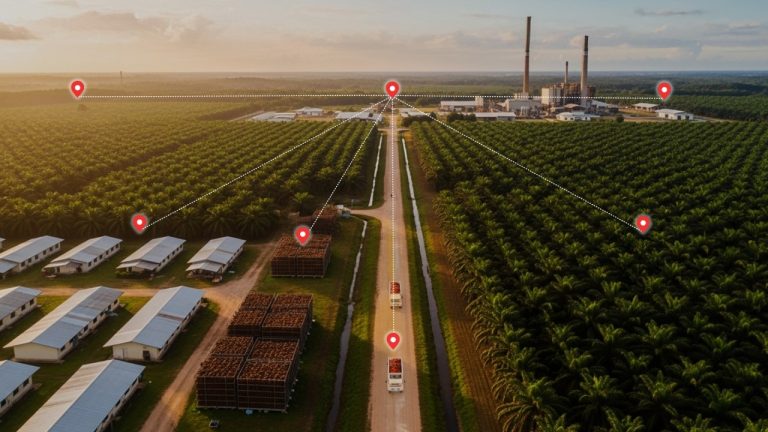
- Drone and Satellite Imaging: To monitor growth rates and detect nutrient deficiencies or pest outbreaks early.
- Internet of Things (IoT): Ground sensors and automated weather stations that provide real-time data to estate managers.
- Milling Innovation: Utilising enzymes and advanced data analytics in refineries to optimise oil extraction and ensure food safety through the “One Stream” approach — an integrated model that unifies the entire value chain from plantation to customer.
- Mechanisations for Pest and Disease Control: Deploying automated spraying systems and mechanised application technologies to address biological threats with surgical accuracy, reducing manual intervention, and chemical footprint.
- Field Upkeep: Employing specialised machinery and autonomous equipment for ground cover management and terrace upkeep to ensure optimal palm health and soil integrity.
- Crop Evacuation: Integrating mechanised loading systems and real-time transit tracking to accelerate the movement of fresh fruit bunches from the field to the mill, preserving oil quality and reducing fruit loss.
Decoding A Deforestation-Free Future
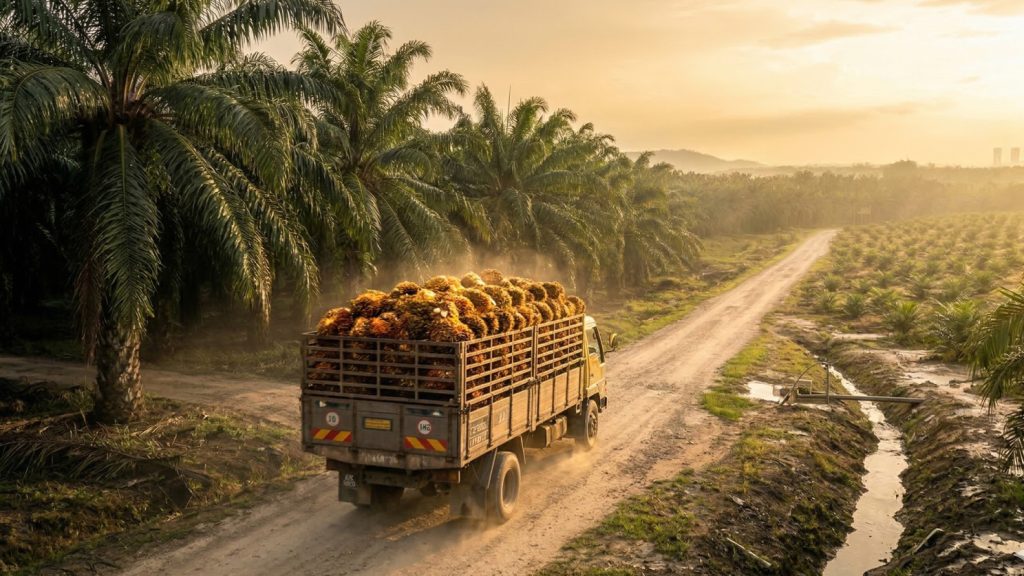
The challenge of feeding more than 9 billion people while driving the conservation of our world’s most precious landscapes is a global imperative. In the next 15 to 20 years, as we replant our Malaysian estates with these elite materials, we expect to produce an additional 300,000 metric tonnes of oil annually. That is enough to feed 15 million people, and it is equivalent to the output of 50,000 hectares of land that will never need to be cleared – safeguarding vital ecosystems, thus preserving nature.
At SD Guthrie, we believe the greatest innovations are those that reach beyond achievement and become a force for collective good. The challenge of nourishing a growing world while protecting the landscapes that sustain it is far too important for any one organisation to carry alone. It calls for minds united by purpose, and partnerships guided by responsibility. To all who share this vision, we welcome the opportunity to stand together, to shape a future where abundance is created not at nature’s expense, but in harmony with it.