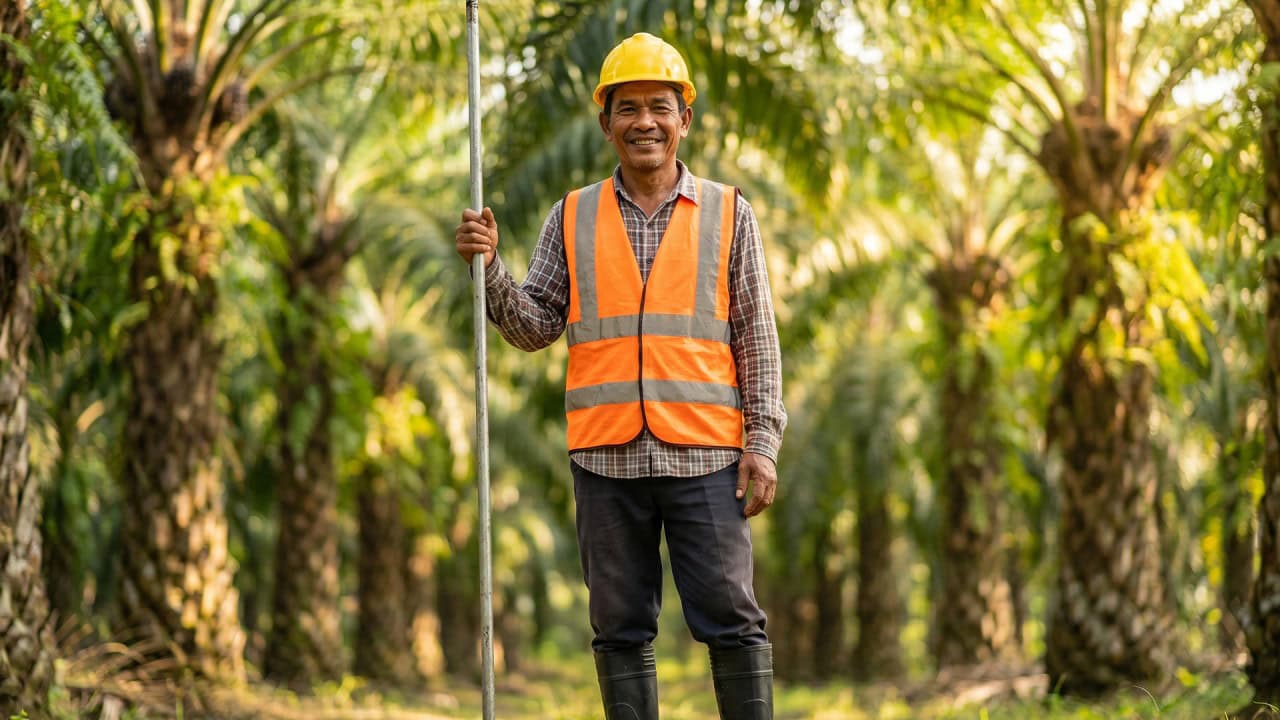
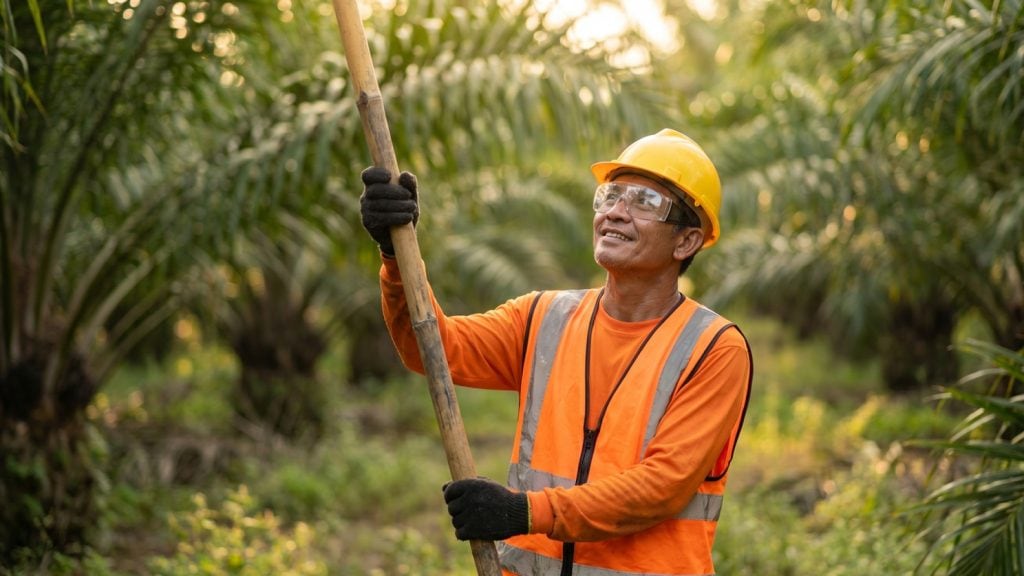
Long before dawn breaks over the oil palm canopies of Sungai Galah, Perak, an independent smallholder is already walking their rows of trees. For decades, these growers know every inch of their soil, relying on instinct to sustain their families. Yet today, their morning rhythm is often weighed down by anxiousness, from unpredictable weather patterns, volatile prices, and the complex maze of global sustainability compliance. They are the true backbone of our industry, yet they remain the most vulnerable to its shifts.
At SD Guthrie, we recognise that the true measure of our success as a global leader in certified sustainable palm oil is in ensuring these hardworking individuals are never left behind. Our mission is to transform them from vulnerable growers into fully empowered, resilient partners in a shared, sustainable future.
The Smallholder Landscape: Challenges and Opportunities
Smallholders currently manage a significant portion of the land dedicated to oil palm cultivation globally. However, they face multifaceted challenges that hinder their ability to meet modern industry standards. These include limited access to high-quality planting materials, lack of technical training in good agricultural practices (GAP), and the escalating operational costs of essential inputs and manual labour.
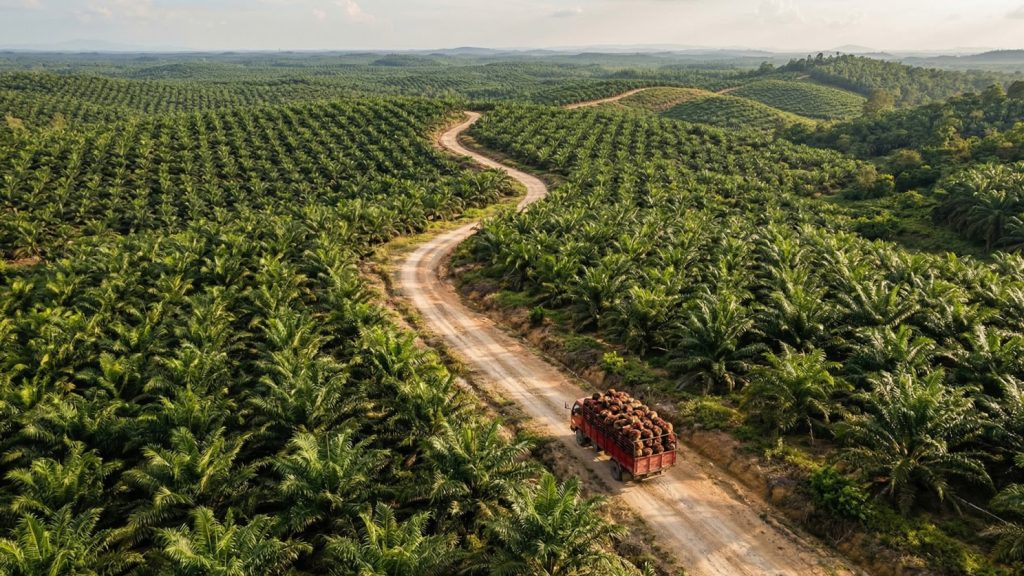
At SD Guthrie, we currently source from over 38,879 smallholders across our global operations, covering an area of more than 102,988 hectares. Our commitment is to bridge the gap between these independent growers and the global market by providing the tools, training, and financial structures they need to succeed. Supporting these growers is a key part of our business strategy, as our milling infrastructure relies on their volume for operational optimisation. With these growers representing over 25% of global production, their integration is the only viable path to a supply chain that is fully traceable and NDPE compliant.
Can a Global Strategy Succeed Without Local Nuance?
We understand that the needs of smallholders vary significantly across different geographical landscapes. Therefore, our initiatives are tailored to the specific socio-economic and regulatory environments of the regions where we operate.
Malaysia: Integration and Skills Development
In Malaysia, our goal is to bring independent smallholders into the “sustainably certified circle”. We have fully embraced the government’s mandatory Malaysian Sustainable Palm Oil (MSPO) Certification Scheme, which serves as a baseline for responsible production.
Our progress in Malaysia is built on distinct multi-partner collaborations designed to address the specific requirements of independent growers. By working alongside the Asia School of Business, Solidaridad, and Colgate-Palmolive, as well as governing bodies such as the MPOB and MSPO, we are scaling capacity-building programmes across the region. These initiatives prioritise the implementation of Good Agricultural Practices (GAP) while driving measurable livelihood improvements for the communities within our supply chain.
By the close of 2025, we had trained 2,887 smallholders across Malaysia in Good Agricultural Practices (GAP), quality management and international sustainability standards together with our programme partners. The programme equips dealers, traders, and farmers with the knowledge to navigate sustainability compliance while providing the technical foundations for success. We facilitate access to essential agroservices, including fertiliser support, high-quality seeds for replanting, and professional agronomic advice and assessments, to ensure long-term viability in the global market.
Indonesia: The Plasma and KKPA Schemes
Our operations in Indonesia focus on “scheme smallholders” through the Kredit Koperasi Primer Anggota (KKPA) and Plasma initiatives. In 2025, we supported over 13,000 smallholders through these models, which integrate them directly into our managed supply chain.
The Plasma scheme is particularly impactful, as we manage land on behalf of local communities, providing them with technical expertise and share certificates that entitle them to a portion of the profits. We also provide financial literacy training, including sessions on budgeting and banking, to help families manage their increased income effectively. In regions like Seruyan, we are also advancing jurisdictional certification via the Bapakat Sustainable Palm Oil Association, creating a landscape-wide culture of responsibility.
Papua New Guinea and Solomon Islands: Gender Inclusion and Premiums
In the Pacific, our approach through New Britain Palm Oil Limited (NBPOL) centres on human empowerment and financial transparency. The Mama Loose Fruit Scheme is a hallmark of this effort. By 2025, the programme had registered 6,783 women smallholders, providing them with direct access to the economic opportunities within our value chain. By providing women with the tools and training to manage their own harvests, we are fostering financial independence and strengthening the social fabric of these communities. Furthermore, we believe that the financial rewards of sustainability should reach those doing the work on the ground. In Papua New Guinea, SD Guthrie covers 100% of the certification costs for our smallholders. We also ensure that RSPO premiums are paid directly to the growers based on their production, with no administrative deductions, providing a tangible economic incentive for sustainable farming.
Thailand: Strengthening Third-Party Connections
Since 2024, we have collaborated with over 2,000 smallholders in Thailand who supply through third-party mills, maintaining a presence in the region entirely without estates. This work was accelerated in 2025 through the Palm Quest Project that focuses on sustainability training and the collection of traceability data across three key smallholder groups. By prioritising capacity building and RSPO certification support, we are ensuring these independent growers are not excluded from the global supply chains of the future.
Digital Traceability and Innovation
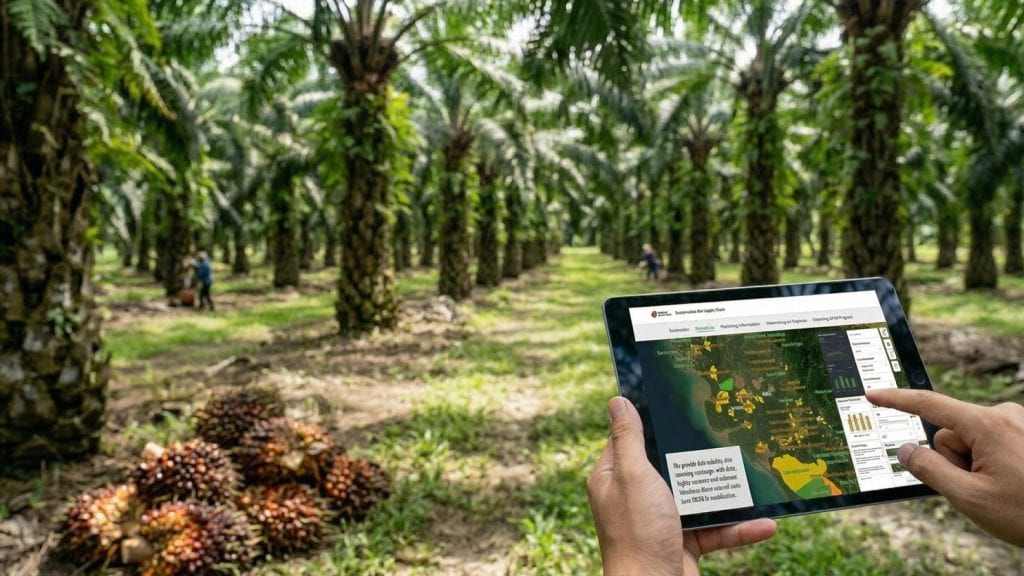
Innovation is a key driver of our growth, and it is especially important for helping small farmers join our network. One of the greatest barriers for smallholders in reaching global markets is the requirement for 100% traceability. SD Guthrie has achieved this milestone, including for those supplying through dealers and traders.
Our traceability frameworks allow us to map the journey of every fresh fruit bunch (FFB) back to its source. This provides our brand partners with unparalleled visibility and the assurance that their supply chain is free from deforestation and exploitation. By integrating field-level data with satellite monitoring, we can identify risks early and facilitate corrective engagement with smallholders. This architecture ensures that technical compliance remains a mechanism for improvement, reinforcing our commitment to an ethical and resilient supply chain.
The Human Element: Resilience and Progress
The data in our 2025 Sustainability Report tells a story of global leadership, but the real impact is found in the lives transformed by these partnerships. Our “train-the-trainer” models ensure that knowledge stays within the community, creating a cycle of improvement that lasts.
This impact is best explained by those on the ground. Ramid Ramli, a smallholder from Perak, Malaysia, says: “This programme improved my understanding of plantation management and fertilisation techniques. Since applying what I’ve learned, my FFB sales have improved.” As the Chairman of the Penanam Sawit Mampan Cooperative, Dealer Haji Morsin bin Peraman shares a similar sentiment: “I truly believe that the training programme conducted today is the best. It was led by outstanding agencies. The training programme is excellent and can guide smallholders towards a better future.”
Beyond these individual successes, these partnerships are the foundation of a truly inclusive supply chain. As global regulations such as the EUDR introduce stringent requirements for traceability, land ownership, and legality, the smallholder is frequently at risk of being left behind by the global market. We at SD Guthrie are committed to dismantling these barriers. By bridging the gap between independent farming and international compliance, we are ensuring that our product delivery is defined by both its environmental integrity and its structural inclusivity.
A Vision for 2035
Our journey is far from over. SD Guthrie remains dedicated to our goal of engaging 50,000 smallholders by 2035 through tailored capacity-building and new livelihood opportunities. We are continuously exploring new ways to enhance soil health and biodiversity through regenerative agricultural frameworks, which will be piloted across our operations by 2028.
As we move forward, we invite our partners to join a mission that connects the plantation directly to the global market. At the heart of our strategy is the OneStream model—a seamless integration of upstream operations and downstream reach. By operating as a single, unified flow, we ensure that the progress of the smallholder is built into every product we deliver. This approach proves that the future of agriculture is a journey from the source to the world, handled by a single organisation you can trust. Proving that a large-scale, global business can operate with a “Beyond Zero” mindset – minimising harm while maximising positive impact for people and the planet.
Partner with the Global Leader in Sustainable Palm Oil
Credibility and visibility are the new currencies of the global market. Contact our partnership team today for more information on how we can bring transparency to your supply chain and provide you with a source you can trust.
To learn more about our global impact and read the full details of our initiatives, visit our website or download the 2025 Sustainability Report. Reports | SD Guthrie