
The Illusion of the Thermal Coordinate
Bakery shortenings play a critical role in determining the structure, texture, and overall quality of baked products. The choice of fat defines how a product feels to the consumer, how it behaves during production, and how long it stays fresh on the shelf.
In bakery applications, parameters such as melting point and solid fat content provide indication on how a shortening will behave and where it can be used. However, the reality on the production line is often different. You can use two shortenings with the identical melting point and yet see two entirely different results in the oven. One produces a light, fine-crumbed cake that holds its volume perfectly, while the other produces something flat and dense.
Why? Because the success of a bake depends on the “invisible architecture” of the fat known as internal crystal structure, formed through formulation and processing. This structure determines how well the shortening supports aeration, texture development, and product consistency.
To ensure consistent results at scale, we must understand how the fat’s formulation and processing work together to provide reliable performance through aeration, tenderness, and lasting stability.
Shortening 101: The Shift from Chance to Design
To understand where the future is headed, we must look at how it all began. Before the existence of modern shortening, the baker’s craft was limited to their circumstances. For centuries, the industry relied on animal fats, lard and tallow. These were fats of necessity, not design. They were seasonal, inconsistent in quality, and prone to spoilage. A baker in winter dealt with a different ingredient than a baker in summer. Quality was a matter of luck, and “premium” was a moving target.
The late 19th century brought the first true revolution: the shift to vegetable-oil-based systems. This was the moment fat moved from a commodity of nature to a product of engineering. The invention of the hydrogenation process allowed us to take liquid oils and, for the first time, “structure” them into solids that remained stable at room temperature. Modern shortening is the evolution of that breakthrough. It is a neutral, highly stable, and meticulously refined system designed to meet the unforgiving demands of a high-speed production line.
The Science of Tenderness
The name “shortening” is itself a technical description of its primary scientific role. In the architecture of a dough, flour proteins readily hydrate with water, forming gluten networks that give elastic structure to products like sourdough loaf. However, in cakes, biscuits, and pastries, too much gluten can lead to tough or chewy textures.
Shortening acts as a structural intervention. As the fat is folded or creamed into the dough, it performs a delicate act of sabotage: it coats the flour particles in a protective film of lipids. This physical barrier prevents the gluten from bonding into those long, rubbery strands. It literally “shortens” the gluten network.
The result is a fundamental shift in texture. By inhibiting that elasticity, the shortening creates a “short” crumb, the hallmark of tenderness. Without the precision of the shortening, a cookie would be a leather disc, a pie crust would be a tough casing rather than a flaky delight. The shortening provides the tenderness that consumers crave, ensuring that every bite yields with effortless grace.
The Processing Paradox: Texturisation as the “Memory” of the Fat
If the oil blending defines what a shortening is, then texturisation defines what a shortening does. This is where many manufacturers lose their way. They assume that as long as the formulation is correct, the performance is guaranteed. This is the “Processing Paradox.”
Think of shortening as an engineered crystal network. How those crystals are formed is just as important as the oil they are made from.
The Hidden Architecture of Fat
Rather than a simple solid, think of fat as the invisible internal framework of your bake. During manufacturing, the fat is meticulously organised into a microscopic network, transforming it from a simple solid into a functional structural element.
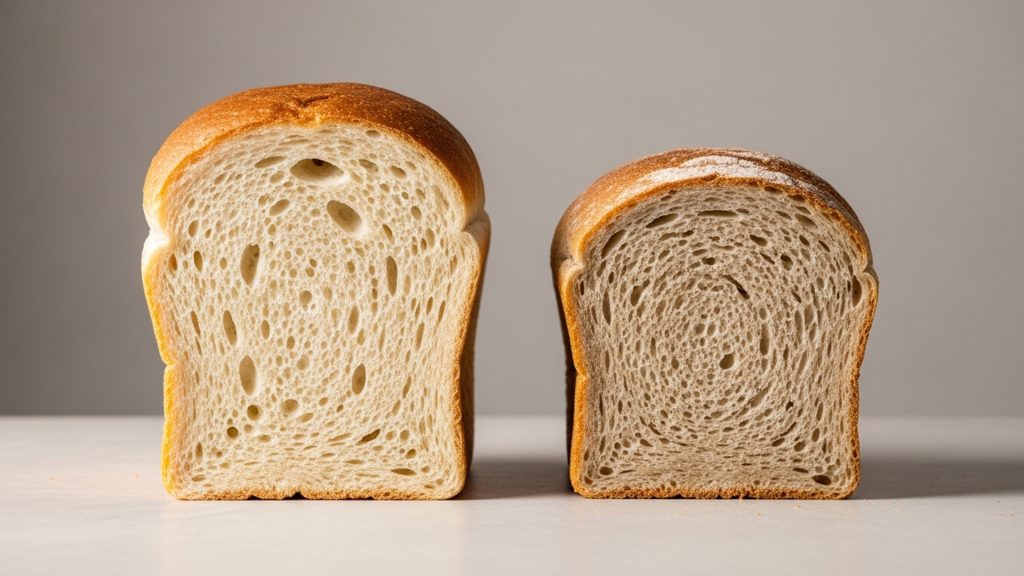
If this process is rushed, the resulting structure is chaotic and fragile, making the shortening less effective at holding air. As a result, air bubbles may collapse during mixing, leading to products that are denser, heavier, and less uniform in texture, a result of a technical blind spot in the production process.
However, when fat is cooled with precision, it weaves a resilient, uniform web. This structure is strong enough to trap and retain more tiny air bubbles effectively, providing the essential “grip” needed for aeration. This is what creates that premium lift, a sponge that is tall, light, and luxuriously soft.
Why Aeration is the Key Differentiator
In the world of cakes and icings, aeration performance is the thin line between a future-proofed product and a shelf-failure. Effective aeration governs how much air is incorporated during mixing and, more importantly, how stable those air cells remain as they transition from the mixer to the intense heat of the oven.
Shortening crystals act as “anchors.” When you whip a shortening system, these solid crystals hold the air bubbles in place within the semi-solid matrix. If the crystal network is weak or irregular, the air escapes. This leads to uneven crumb structures, tunnels in your cakes, or a total loss of volume. By engineering the crystal network, we ensure that the “lift” you see in the batter is the “lift” the consumer sees in the final product.
The Waxy Dilemma
In the tropical heat of a global supply chain, structure is often bought at the cost of the eating experience. This is the “Balancing Act” of fat science.
Higher-melting-point fats are the heavy lifters of the industry. They provide the “bone structure” needed for shortenings to remain solid and functional in warm climates. They are essential for icings that won’t collapse and pastries that won’t leak. However, they carry a hidden cost. Because their melting point is higher than human body temperature, they can leave a “waxy” film on the palate, a sensory “clutter” that masks the flavours of the bake.
On the other hand, fats with lower melting profiles deliver a cleaner, smoother sensory experience, melting readily to enhance flavour perception. However, they may offer less structural support during mixing and handling, making them more sensitive to processing and temperature conditions.
The Emulsifier as the Silent Mediator
The solution is not to settle for a compromise, but to use advanced engineering to find the perfect balance of performance and taste. Through the strategic use of emulsifiers, such as mono- and diglycerides, we can bridge this gap.
These functional ingredients improve the interaction between fat and air, enabling the formation of smaller, more uniform air bubbles that remain stable throughout mixing and baking. The result is enhanced volume, a finer and more consistent crumb structure, and improved product reliability, while delivering a smooth, clean mouthfeel without the heaviness or waxiness often associated with higher solid fat systems. It is the science of having it all—the stability and performance the baker needs and the “clean” finish the consumer demands.

The Functional Range: Designing for the Application
Modern bakery fats are engineered for specific functional outcomes:
Pastries & Laminated Doughs: These require fats that provide stable layering and controlled melting to ensure flakiness even in warm climates.
Cookies & Biscuits: The fat must keep the dough soft, prevent excessive spread, and deliver a crumbly, tender texture without a greasy mouthfeel.
Cakes & High-Aeration Systems: These demand a system that supports maximum air incorporation and a fine, uniform crumb.
Breads & Rolls: Here, the focus shifts to crumb softness, resilience, and extending the shelf-life of the finished product.
The SD Guthrie Edge: Engineering the Unseen
Consistent baking is never an accident. It is the result of a partnership between the baker’s intuition and the engineer’s precision. At SD Guthrie International, we recognise that the right fat structure changes everything, from how the dough feels as it leaves the mixer to how long that loaf remains soft on the retail shelf.
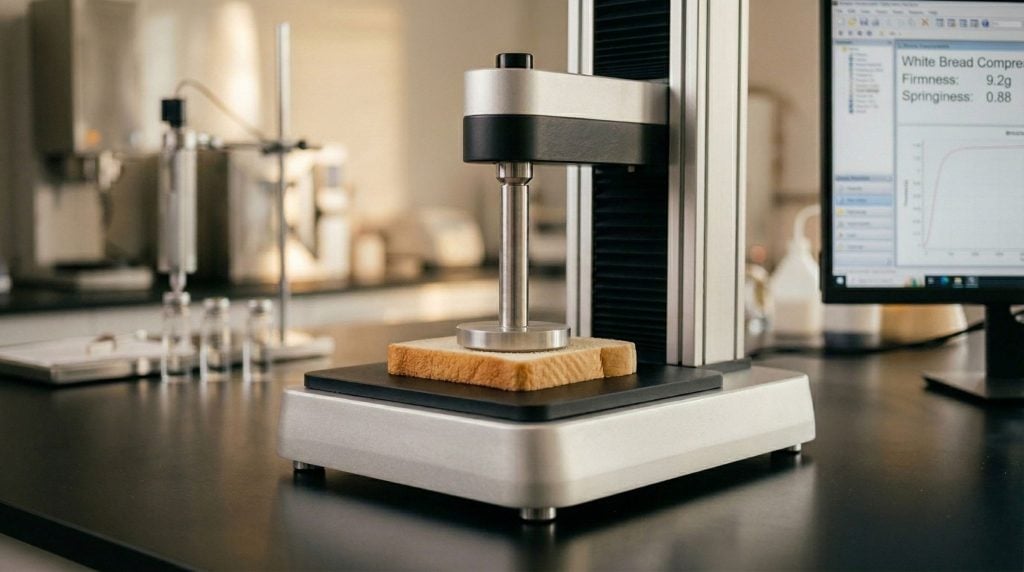
Precision in practice: Using texture analysis to quantify the exact softness of the finished bake.
By using tools such as texture analysers to measure softness, we ensure our fat systems deliver consistent tenderness in real applications. While specification sheets provide key parameters such as melting point and fat composition, they do not fully capture how a shortening performs during processing and baking.
Texturisation is the art of cooling and working fat to establish its internal structure, a process that defines the shortening’s plasticity and workability. As a technical partner, we look beyond the ingredients to engineer systems that deliver consistent results in any climate or production environment.
A Partnership of Certainty
Our approach connects formulation science with real-world production needs, helping bakeries achieve:
Consistent Quality: Eliminating the variability that causes production headaches.
Processing Efficiency: Ensuring fats fit your specific equipment and ambient conditions.
Accelerated Innovation: Using our pilot facilities to rapid-prototype new products with reduced risk.
Sustainable Integrity: Leveraging our upstream traceability to ensure your brand is built on ethical foundations.
The future of the bakery industry belongs to those who look beyond the surface of a data point to find a partner in precision. At SD Guthrie International, we believe that exceptional quality is never an accident, but rather meticulously engineered. By bridging the gap between technical data and real-world performance, we provide the structural foundation needed to create superior products, turning verifiable excellence into lasting consumer trust.
Secure your future with a partner who understands the “soul” of the bake.
Contact our SD Guthrie International partnership team today for more information on how we can tailor a high-performance shortening solution for your production line.
Discover the SD Guthrie International standard:
https://www.sdguthrie-international.com/our-work/partner-with-us/