Creating the right fat for the right application begins long before the finished product reaches the shelf.
It starts with understanding how different oils and fats behave, how they complement each other, and how their functionality can be refined to meet specific performance requirements.
This is where enzymatic interesterification (EIE) plays an important role.
Rather than modifying a single oil in isolation, EIE works with a deliberately formulated blend of palm-based fractions, combining their strengths before fine-tuning performance.
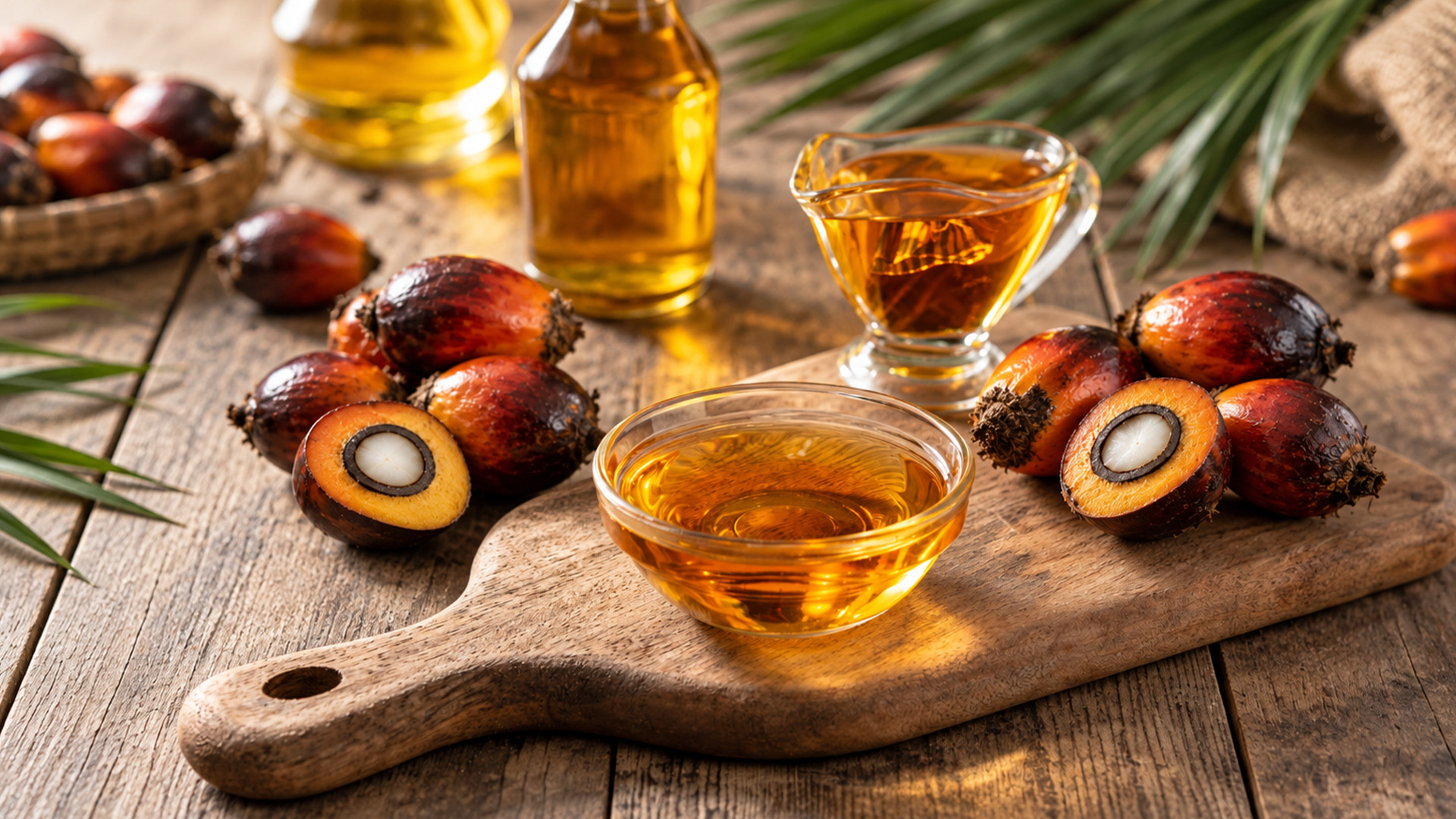
By bringing together palm oil, palm stearin, and palm kernel, manufacturers can create fat systems designed around the requirements of applications such as margarines, bakery fats, confectionery, and speciality fats.
Building functionality through the right blend
Each palm-based fraction contributes a different strength, forming the foundation of a fat system designed around a specific performance requirement.

However, combining these components in the right proportions may not always deliver the exact melting behaviour, texture, or crystallisation profile required for a specific application.
This is where EIE provides another level of control.
Fine-tuning performance through enzymatic restructuring
At its core, EIE rearranges existing fatty acids within triglyceride molecules across the blend. It does not change what the fat is made of, but how its components are organised to achieve the desired performance.
In simple terms, EIE refines the arrangement of existing components to create a fat system with more targeted functionality.

This allows manufacturers to fine-tune melting behaviour, crystallisation, texture, and consistency, transforming blends into more controlled fat systems.
Creating fats designed for specific applications
The value of EIE lies in its ability to tailor palm-based blends around the functional requirements of different applications.

Tailoring fat solutions through EIE to deliver the right functionality for every food application.
EIE can also modify melting profiles to replicate desirable characteristics associated with naturally occurring fats such as butter, supporting the development of more specialised fat solutions.
Why enzymatic interesterification (EIE)?
EIE is one approach within the broader field of fat modification.
Chemical interesterification can also restructure palm-based blends, but it does so through a more random redistribution of fatty acids. EIE uses lipase enzymes for a more selective rearrangement, providing closer control over structure and functionality under milder processing conditions. This selective enzymatic approach can offer a cleaner processing route with reduced waste generation, supporting efforts to improve environmental performance without compromising functionality.

The difference between Chemical Interesterification and Enzymatic Interesterification.
This greater selectivity allows manufacturers to develop fat systems with more targeted performance characteristics. EIE also provides a route to achieve required functionality without relying on partial hydrogenation, which has historically been associated with industrial trans fats.
It is important to note that EIE changes a fat’s physical properties rather than its nutritional profile.
Bringing EIE capability closer to customers
As demand grows for more specialised fat systems, having the capability to produce these solutions closer to customers becomes increasingly important.
As part of its wider site investment, SDGI Liverpool is establishing new EIE production capability to support the growing demand for specialised fat systems.

The new capability will utilise proven enzyme technology from Novozymes to support selective fatty acid rearrangement within the fat structure.
A wider investment in Liverpool’s future capabilities
The new EIE capability forms part of a wider investment at SDGI Liverpool, strengthening the site’s production capacity, infrastructure, and operational capabilities to support future growth.

The investment includes a new refinery designed to enhance refining capacity and support future production needs, incorporating technologies designed to meet current and upcoming regulatory requirements while utilising best available technologies to improve energy efficiency.
A new effluent treatment plant also enhances wastewater treatment capability by capturing and treating process wastewater streams before discharge, reinforcing SDGI’s continued commitment to responsible operations and environmental stewardship.
Together, these investments reflect SDGI Liverpool’s focus on developing advanced processing capabilities, strengthening infrastructure, and supporting evolving customer needs.
The future of precision fat design
The future of speciality fats lies in precision: understanding the unique contribution of each component and tailoring blends around the performance each application requires.
By combining deliberate blend design with enzymatic restructuring, EIE enables the development of purpose-built fat systems with greater control over functionality, texture, and performance.
As SDGI Liverpool expands its capabilities, this investment strengthens its ability to develop and deliver more specialised palm-based fat solutions for evolving customer needs.