
1821
Alexander Guthrie established Guthrie & Co. in Singapore as one of the first British trading houses in Southeast Asia.
Our Story
SD Guthrie International is the customer‑facing arm of SD Guthrie, transforming sustainably sourced palm oil into high‑performance solutions built around what matters most to you and your end consumers.
SD Guthrie International was created to bring SD Guthrie’s scale, sustainability and technical expertise closer to customers who rely on palm‑based ingredients to power their brands and businesses. As the downstream specialist, SD Guthrie International focuses on understanding each customer’s requirements, then configuring products, quality standards, logistics and service levels to deliver reliable, compliant and value‑adding solutions across the globe.
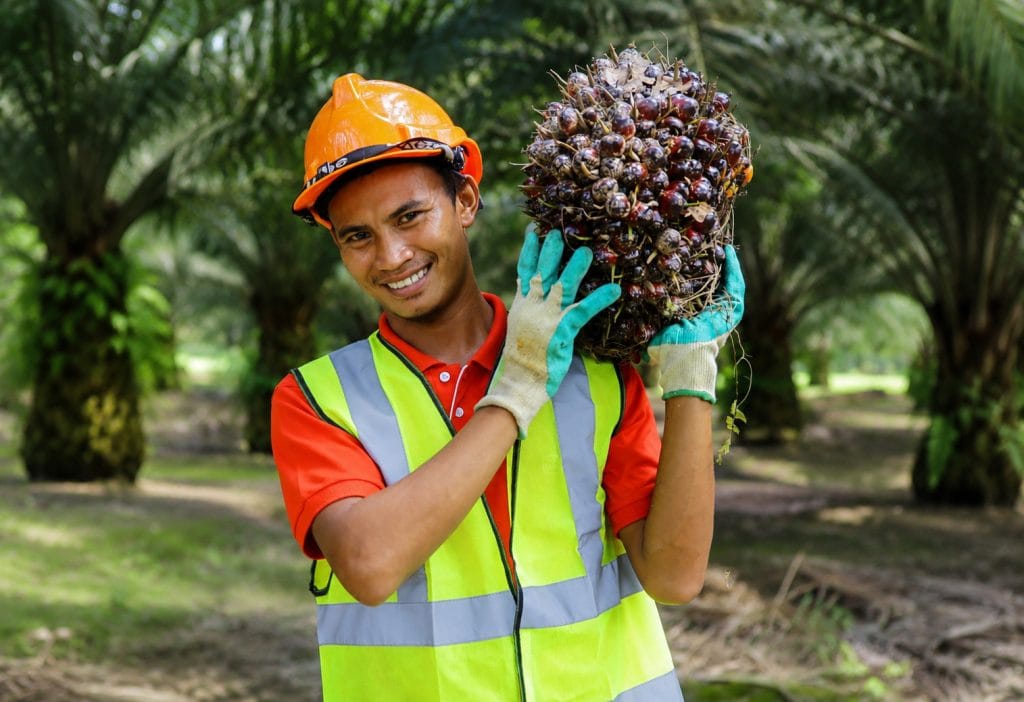
As global expectations around sustainability, traceability and product performance intensified, SD Guthrie established SD Guthrie International (SDGI) to focus exclusively on the downstream value chain and on what end customers need from palm‑based solutions. By integrating trading, refining, manufacturing, R&D and customer service under one downstream platform, SD Guthrie International gives customers a single, accountable partner that understands their industry, formulations and regulatory pressures.
SD Guthrie International’s commercial and technical teams work alongside customers to co‑create formulations, optimise specifications, and design supply solutions that strengthen their products and brands in the eyes of consumers.
Every SD Guthrie International milestone reflects a step towards better service, quality and solutions for our customers.
Alexander Guthrie established Guthrie & Co. in Singapore as one of the first British trading houses in Southeast Asia.
Daniel and Smith Harrison, and Joseph Crosfield formed a tea and coffee trading partnership called Harrisons & Crosfield in Liverpool, England.
Harrisons & Crosfield became the third-largest tea trader in the world with annual sales of up to 2.75 million pounds (1.25 million kg).
Guthrie & Co. diversified into the insurance and banking industries and invested in steamship companies.
Harrisons & Crosfield established its first eastern branch, Lampard, Crosfield & Co, in Colombo, Ceylon (Sri Lanka), marking their entry into the plantation ownership business.
Guthrie & Co. accepted agencies for coffee estates in Selangor and Negeri Sembilan, which were experimentally planted with rubber.
Guthrie & Co. partnered with Scott & Co. to form Guthrie and Company Ltd., capitalised at RM1 million. Harrisons & Crosfield invested in rubber in Malaya by acquiring Pataling Company, which owns an estate in Selangor.
Golden Hope Rubber Estate Ltd. successfully acquired Golden Hope Estate, located by the Langat River in Klang, Selangor, which consists of 900 acres of rubber, coffee, and coconuts.
Harrisons & Crosfield opened its first Kuala Lumpur office under the name Crosfield, Lampard & Co. It acquired estates in Melaka, Selangor and Perak with a total of 6,673 acres, and entered Sumatra via the acquisition of Begerpang Estate.
The first commercial planting of oil palm in Malaya took place in Tennamaram Estate, Selangor, laying the foundations for the industry in the country.
Harrisons & Crosfield was given exclusive rights to cut and develop the timber industry in Borneo through the acquisition of the China Borneo Company.
Guthrie & Co. acquired property at Mengkibol, Johor, planted with Elaeis Guineensis, the African oil palm, and established the first hydraulic press system at the factory.
Guthrie & Co. purchased a small property in Kluang, Johor, planted with Elaeis Guineensis, and named it ‘Elaeis’.
Research and development (R&D) in Guthrie & Co. commenced with the establishment of Chemara Research Station, Johor.
Formation of Oil Palms of Malaya Limited. Sime Darby & Co. opened its first office in Kuala Lumpur, located along the present-day Jalan Tun H.S. Lee (formerly High Street).
Sime Darby & Co. moved its headquarters from Melaka to Singapore.
World War II: The first bomb in Singapore landed on the roof of 6 Battery Road, the headquarters of Messrs Guthrie and Company.
Creation of Harrisons & Crosfield's Palm Oil Research Station in Klanang Bahru estate, Banting by research officer Brian Gray.
Harrisons & Crosfield acquired Carey Island, Selangor with 18,000 acres of rubber, coconut, and tea, and 10,000 acres of reserve land suitable for oil palm cultivation.
Incorporation of Kumpulan Guthrie Sdn. Bhd. to serve as the local agent for Guthrie Estates Agency Ltd. to manage the vast holdings.
Guthrie Corporation Limited transferred its plantation interests from UK subsidiaries to Malaysian incorporated companies. It expanded into the Philippines, China, and Africa.
The amalgamation of the 'three sisters' – Golden Hope Rubber Estate Ltd, Pataling Company, and London Asiatic resulted in Harrisons Malaysian Estates Ltd. owning a total land bank of 179,000 acres, planted with rubber, oil palm, and coconut.
PNB and Harrisons & Crosfield established a joint venture, Harrisons Plantations Berhad, to acquire the plantation interests of Harrisons Malaysian Estates Ltd.
Guthrie Corporation Limited's plantation interests were brought back to Malaysia. Plantation assets in Malaysia and overseas, and the marketing and distribution network companies in the UK and the US, were transferred to Kumpulan Guthrie Sdn. Bhd.
Golden Hope Plantations Berhad introduced the Zero-Burning Replanting Technique to replace the traditional slash-and-burn method of clearing land, which will eventually become the industry standard.
Harrisons & Crosfield ventured into the food sector via the acquisition of Kapar Coconut Industries Sdn Bhd.
Golden Hope Plantations Berhad was elected to the United Nations Environment Programme’s (UNEP) Global 500 Roll of Honour for the commercialisation of the Zero-Burning Replanting Technique.
Kumpulan Guthrie Berhad strategically diversified its core business into plantations, property development, manufacturing, and services. The Group also commenced its property development activity in Bukit Jelutong.
Merger of Kumpulan Guthrie Berhad, Golden Hope Plantations Berhad, and Sime Darby Berhad to form a new company, which took on the Sime Darby brand. All plantation activities and operations were consolidated under a subsidiary, Sime Darby Plantation Sdn. Bhd. (SD Plantation).Synergy Drive was listed on Bursa Malaysia as Sime Darby Berhad with a market capitalisation of RM59.5 billion – nearly 80% more than the combined market capitalisation of RM31.6 billion, of the three companies at the start of the merger process.
Launch of the Sime Darby Innovation Centre Europe (ICE) in Zwijndrecht, the Netherlands, a state-of-the-art facility for testing prototype oil formulations in food applications and production at a pilot scale.
SD Plantation became the world’s largest producer of CSPO. A new Central Housing Complex was launched to build modern housing facilities to further raise the standard of living for employees.
SD Plantation established its Prevention of Sexual Harassment Policy.
SD Plantation became the founding member of the High Carbon Stock (HCS) Science Study and committed to the Sustainable Palm Oil Manifesto, committing to no deforestation and higher sustainability standards for industry stakeholders.
SD Plantation acquired New Britain Palm Oil Limited (NBPOL), adding another 135,000 hectares of land in Papua New Guinea and Solomon Islands, bringing the Group’s total landbank to almost one million hectares.
SD Plantation launched its Responsible Agriculture Charter (RAC). SD Plantation commenced its first large-scale commercial planting of GenomeSelect® high yielding oil palms, which allows the company to produce more oil with existing land.
SD Plantation was listed on Bursa Malaysia on 30 November 2017, following the demerger from the holding company, Sime Darby Berhad. SD Plantation became Malaysia’s first ever company to win the Edison Award (Bronze Medal) under the Energy and Sustainable category for GenomeSelect®.
SD Plantation achieved 100% Malaysian Sustainable Palm Oil (MSPO) certification and became the largest producer of MSPO-certified palm oil.
First commercial harvest of GenomeSelect® demonstrated a 20% increase in yield compared to the Calix Q6, the previous best planting material.SD Plantation launched ‘Crosscheck’, an open access online tool that allows traceability to source in SD Plantation’s supply chain.
Publication of the genome map in the public domain to fuel the research of others in the plantation sector. SD Plantation achieved 100% RSPO-certified mills. SD Plantation announced the sale of its 100% equity interest in its Liberia operations.
SD Plantation announced Project Infinity, to transform the laborious, manual and menial work in plantations with mechanisation, automation and digitalisation. SD Plantation aligns its climate-related disclosures with The Task Force on Climate-Related Financial Disclosures (TCFD) recommendations.
SD Plantation committed to achieving net-zero emissions across its entire value chain by 2050. SD Plantation announced Project OMEGA – a programme to transform all its mills in Malaysia, Indonesia, Papua New Guinea and Solomon Islands into certified food safe facilities.
SD Plantation became the world’s first palm oil company with net-zero targets by 2050, fully validated by the Science Based Targets initiative (SBTi).
SD Plantation made GenomeSelect® commercially available.
SD Plantation kicked off 400-hectare Peatland Restoration in its operations in East Malaysia for reforestation, the first project of its kind opting to restore it into a functional peat ecosystem instead of replanting oil palm.
SD Plantation announced two new business verticals in industrial park development and renewable energy.
SD Plantation rebranded to ‘SD Guthrie’.
SD Guthrie unveiled “Beyond Zero”, our sustainability framework.
Downstream, Decarbonised and Demand‑Driven